janrakshak

Categories
About Jan Rakshak Emergency Response Systems Features Public Safety Public safety and security device in India Safety and Security

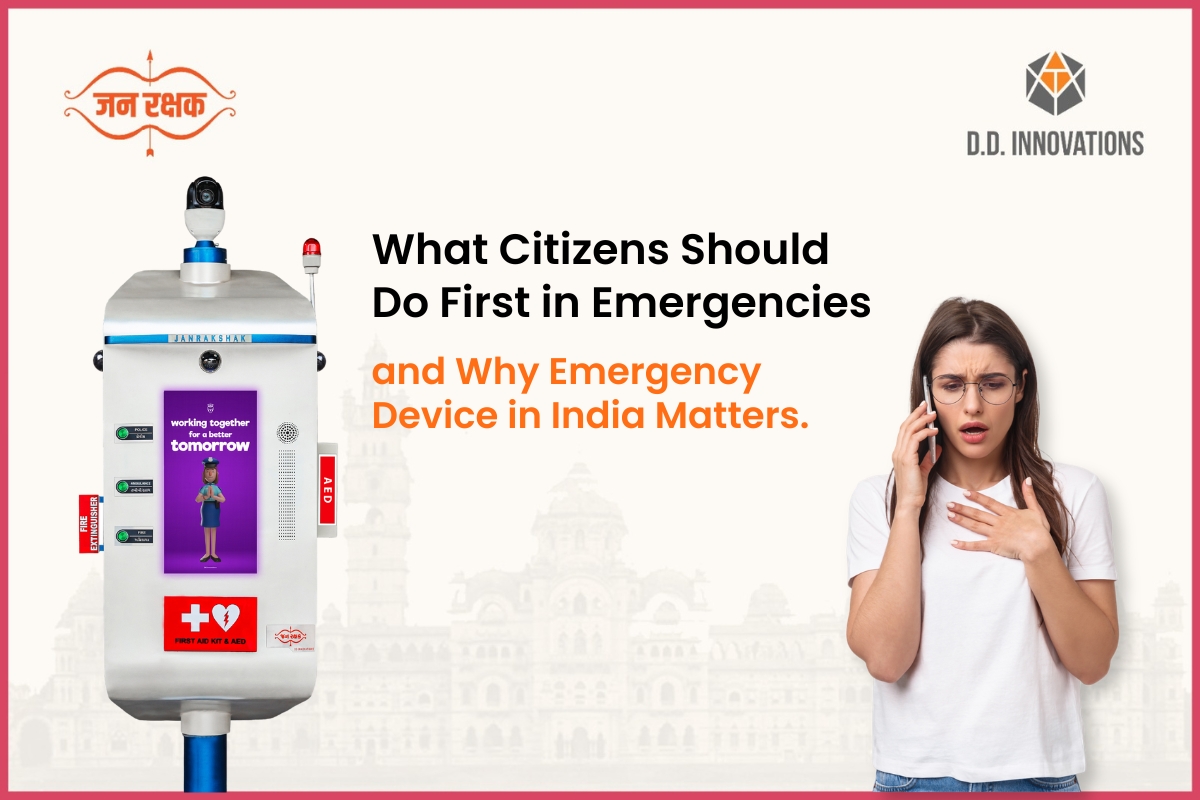
What Citizens Should Do First in Emergencies and Why Emergency Device in India Matters

Emergencies can occur without warning—whether it is a road accident, fire outbreak, medical crisis, or public safety threat. In such critical moments, the actions taken within the first few minutes often determine the outcome. Panic, confusion, and delayed communication can worsen situations, while timely response and clear decision-making can save lives.

In a rapidly urbanizing nation like India, preparedness is no longer optional. Understanding what citizens should do first during emergencies and recognizing the importance of an emergency device in India is essential for building safer and more resilient communities.

When an emergency occurs, people often experience shock or confusion, which can delay action. However, the initial response—commonly known as the “golden minutes”—plays a crucial role in minimizing damage and ensuring timely assistance.

Immediate and informed action can:

  • Prevent escalation of incidents
  • Reduce injuries and fatalities
  • Enable faster coordination with emergency services
  • Support effective rescue and evacuation efforts

Prepared citizens form the foundation of a strong public safety ecosystem.

1. Stay Calm and Assess the Situation

Remaining calm is the first and most important step. Panic can lead to poor decisions and miscommunication. Quickly assess the environment to identify potential risks and determine the type of emergency.

2. Ensure Personal Safety

Before offering help to others, ensure your own safety. Move to a secure location and avoid exposure to hazards such as fire, traffic, electrical risks, or structural damage.

3. Alert Emergency Services Immediately

Contact the appropriate emergency service without delay:

Providing clear and accurate information, including location and nature of the incident, helps authorities respond efficiently.

4. Use Available Emergency Devices

If an emergency device in India is available nearby, use it to establish direct contact with emergency services. Public emergency systems like Jan Rakshak offer one-touch connectivity, eliminating delays caused by searching for numbers or navigating phone calls.

5. Assist Victims Responsibly

If it is safe to do so, provide basic assistance such as first aid, guiding evacuees, or supporting injured individuals until professional help arrives. Avoid moving victims unnecessarily unless there is an immediate risk.

6. Guide and Inform Others

Help maintain order by guiding others to safety, preventing crowd panic, and sharing accurate information with authorities.

Limitations of Traditional Emergency Reporting:

While mobile phones have improved communication, they are not always reliable during emergencies. Network congestion, battery failure, and panic-induced miscommunication can delay assistance. Similarly, CCTV cameras only record incidents and do not provide direct

intervention.These limitations highlight the need for a reliable emergency device in India that ensures instant connectivity with emergency services, even in high-stress situations.

The Role of Emergency Devices in India
  • An emergency device in India is designed to provide immediate access to police, fire, and medical services through a simple and accessible interface. Installed in public areas such as roads, campuses, parks, transport hubs, and commercial zones, these devices act as vital emergency touchpoints.
Key benefits include:
  • Instant one-touch access to emergency services
  • Reduced response time and improved coordination
  • Reliable communication without dependence on personal devices
  • Enhanced safety in high-footfall public spaces
  • Empowerment of citizens to act during emergencies

By bridging the gap between distress and response, emergency devices play a crucial role in strengthening public safety infrastructure.

Jan Rakshak: A Smart Emergency Device in India

Jan Rakshak is an advanced public emergency response system designed to enhance citizen safety across India. Built for simplicity and reliability, the device provides direct connectivity to essential emergency services through three dedicated buttons:

  • 100 – Police
  • 101 – Fire Services
  • 108 – Ambulance

With just a single press, users can alert the relevant authorities, ensuring rapid assistance without the need for mobile connectivity or technical expertise. Installed at strategic locations such as highways, educational institutions, marketplaces, and transport hubs, Jan Rakshak transforms public spaces into secure and responsive environments.

Building Safer Communities Through Awareness

Safety is a shared responsibility. When citizens are aware of emergency protocols and have access to reliable emergency devices, communities become more resilient and prepared.

The integration of an emergency device in India supports:

  • Smart city and urban safety initiatives
  • Disaster preparedness and crisis management
  • Protection for women, children, and senior citizens
  • Institutional and municipal safety compliance
  • Public confidence in safety infrastructure

Empowered citizens, supported by smart technology, form the backbone of a secure society.

Conclusion

Emergencies demand swift action, clarity, and coordination. Knowing what to do first—stay calm, ensure safety, alert authorities, and assist responsibly—can significantly reduce risks and save lives.

As India continues to urbanize, integrating reliable public safety solutions becomes essential. An emergency device in India provides immediate access to emergency services, minimizes response time, and strengthens the nation’s safety infrastructure.

Solutions like Jan Rakshak demonstrate how technology can empower citizens and enhance emergency preparedness. In moments of crisis, a single press of a button can initiate life-saving support.To learn more about implementing advanced emergency safety solutions in your region, visit janrakshak.in and take a proactive step toward building safer communities across India.

FAQS
What should citizens do first during an emergency?

Stay calm, assess the situation, ensure personal safety, and immediately alert emergency services.

What is an emergency device in India?

It is a public safety system that provides direct, one-touch connectivity to police, fire, and ambulance services.

How does Jan Rakshak improve emergency response?

Jan Rakshak enables instant communication with emergency authorities, reducing response time and improving coordination.

Where are emergency devices typically installed?

They are installed at highways, campuses, public parks, transport hubs, marketplaces, and commercial areas.

Why are emergency devices important for smart cities?

They enhance urban safety, support crisis management, and contribute to resilient and secure smart city infrastructure.
Categories
About Jan Rakshak Emergency Response Systems Features Public Safety Public safety and security device in India Safety and Security

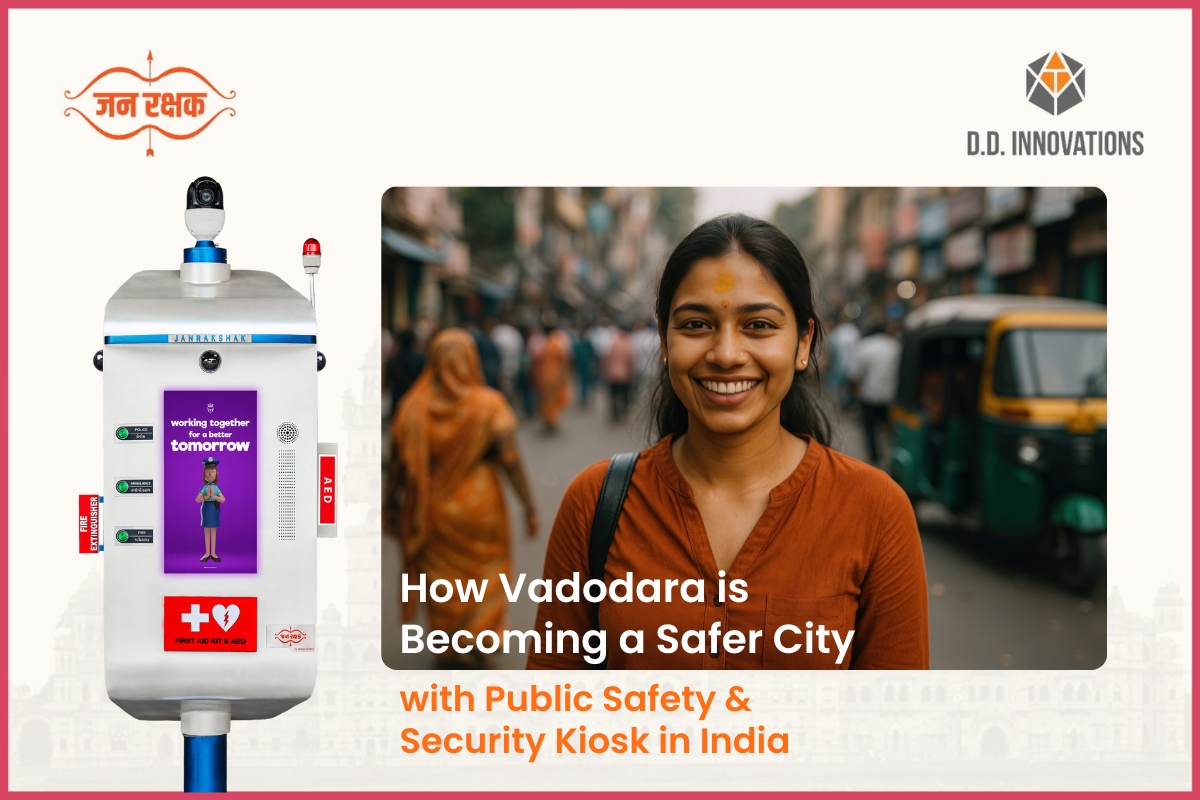
How Vadodara is Becoming a Safer City with Public Safety & Security Kiosk in India

Introduction: Vadodara Leading the Way in Urban Safety

Vadodara, one of Gujarat’s most progressive and culturally rich cities, is rapidly emerging as a model of smart and secure urban development. Known for its educational institutions, thriving industries, and vibrant public spaces, the city is now pioneering innovative public safety initiatives. A significant contributor to this transformation is the installation of the Public Safety & Security Kiosk In India, an advanced emergency response system designed to provide immediate assistance during critical situations.

As urban populations expand and public spaces become busier, safety becomes a top priority. Vadodara’s adoption of smart public safety infrastructure reflects its commitment to building a secure, responsive, and citizen-centric environment for residents and visitors alike.

The Need for Smart Public Safety in Growing Cities

Rapid urbanization has transformed Vadodara into a bustling city with increasing traffic, commercial activity, and public gatherings. With growth comes the responsibility to address challenges such as road accidents, medical emergencies, fire incidents, and security threats.Traditional safety measures like CCTV surveillance and manual reporting systems provide monitoring but often lack real-time responsiveness. In emergency situations, delays in communication can lead to critical consequences. This highlights the importance of integrating a Public Safety & Security Kiosk In India—a system designed to provide immediate and direct access to emergency services.

What is a Public Safety & Security Kiosk?

A Public Safety & Security Kiosk In India is a smart emergency response unit that connects individuals directly with emergency services such as police, fire, and ambulance. Installed in public areas, these kiosks act as immediate points of contact during emergencies, reducing response time and eliminating communication barriers.

Vadodara’s implementation of such kiosks demonstrates how technology-driven solutions can enhance urban safety and support smart city initiatives across India.

Jan Rakshak: Enhancing Vadodara’s Safety Infrastructure

At the heart of Vadodara’s safety transformation is Jan Rakshak, an advanced public emergency system designed specifically for Indian conditions. Its intuitive three-button interface ensures immediate connectivity with emergency services:

  • 100 – Police
  • 101 – Fire Services
  • 108 – Ambulance

With just a single press, citizens can connect directly to the relevant control centre, eliminating delays caused by searching for numbers or navigating call transfers. The presence of this Public Safety & Security Kiosk In India empowers individuals, reduces response time, and strengthens coordination between emergency agencies.

Strategic Installations Across Vadodara

To maximize effectiveness, Jan Rakshak kiosks have been strategically installed at prominent and high-footfall locations throughout Vadodara, including:

  • Busy traffic junctions and highways
  • Educational institutions and university campuses
  • Public parks and recreational zones
  • Tourist destinations and marketplaces
  • Commercial complexes and shopping centres
  • Public transport hubs and bus terminals

These visible safety units not only provide immediate access to emergency services but also act as strong deterrents against crime and misconduct.

Empowering Citizens Through Accessible Technology

One of the defining features of the Public Safety & Security Kiosk In India is its accessibility. Designed for simplicity, the system can be used by anyone—students, senior citizens, visitors, or bystanders—without requiring technical knowledge or mobile connectivity.

This inclusive approach empowers citizens to act during emergencies, transforming them into active participants in public safety. Vadodara’s initiative reflects a shift from reactive safety measures to proactive, community-driven protection.

Supporting Smart City and Urban Safety Initiatives

Vadodara’s adoption of advanced safety solutions aligns with India’s Smart City Mission and broader urban modernization goals. Smart infrastructure extends beyond digital connectivity and transportation; it also includes intelligent safety systems that ensure rapid crisis response.

The Public Safety & Security Kiosk In India contributes to:

  • Faster emergency response times
  • Improved coordination between police, fire, and medical services
  • Enhanced public confidence in safety infrastructure
  • Strengthened urban security and crisis management
  • Inclusive protection for women, children, and senior citizens

By integrating such solutions, Vadodara is setting an example for other cities across the country.

Building Confidence and Community Trust

Visible safety infrastructure plays a vital role in building trust among citizens and visitors. The presence of emergency kiosks reassures people that help is always within reach, fostering a sense of security in public spaces.

For municipal authorities, educational institutions, and commercial establishments, implementing the Public Safety & Security Kiosk In India demonstrates a proactive commitment to public welfare, safety compliance, and social responsibility.

Vadodara: A Model for Safer Indian Cities

Vadodara’s journey toward becoming a safer city showcases how technology and governance can work together to protect lives. By integrating advanced emergency systems like Jan Rakshak into its urban landscape, the city is creating a secure and responsive environment for all.

As other cities across India seek to enhance their safety infrastructure, Vadodara stands as a shining example of how smart innovation can transform public protection and urban resilience.

Conclusion

A truly modern city is defined not only by its infrastructure but by the safety and confidence it offers its citizens. Vadodara’s adoption of the Public Safety & Security Kiosk In India marks a significant step toward building a resilient, inclusive, and secure urban future.

With solutions like Jan Rakshak, public spaces are no longer passive environments—they are equipped to respond instantly to emergencies. By empowering citizens and strengthening emergency response systems, Vadodara is paving the way for safer, smarter cities across India.To learn more about implementing advanced public safety solutions in your city, visit janrakshak.in and discover how Jan Rakshak is shaping the future of urban safety in India.

FAQs

1. What is a Public Safety & Security Kiosk in India?
A Public Safety & Security Kiosk is a smart emergency response system that connects citizens directly to police, fire, and ambulance services for immediate assistance.

2. How does Jan Rakshak improve public safety in Vadodara?
Jan Rakshak provides one-touch access to emergency services, ensuring faster response times and improved coordination between authorities.

3. Where are public safety kiosks installed in Vadodara?
They are strategically placed at traffic junctions, educational institutions, parks, marketplaces, and public transport hubs.

4. Who can use a Public Safety & Security Kiosk?
Anyone—including citizens, visitors, students, and bystanders—can use the kiosk during emergencies without requiring technical knowledge.5. How do safety kiosks support Smart City initiatives?
They enhance urban security, improve emergency response efficiency, and contribute to safer, smarter, and more resilient infrastructure.

Categories
About Jan Rakshak Emergency Response Systems Features For Government Inspiring Stories Road Safety Safe Vadodara

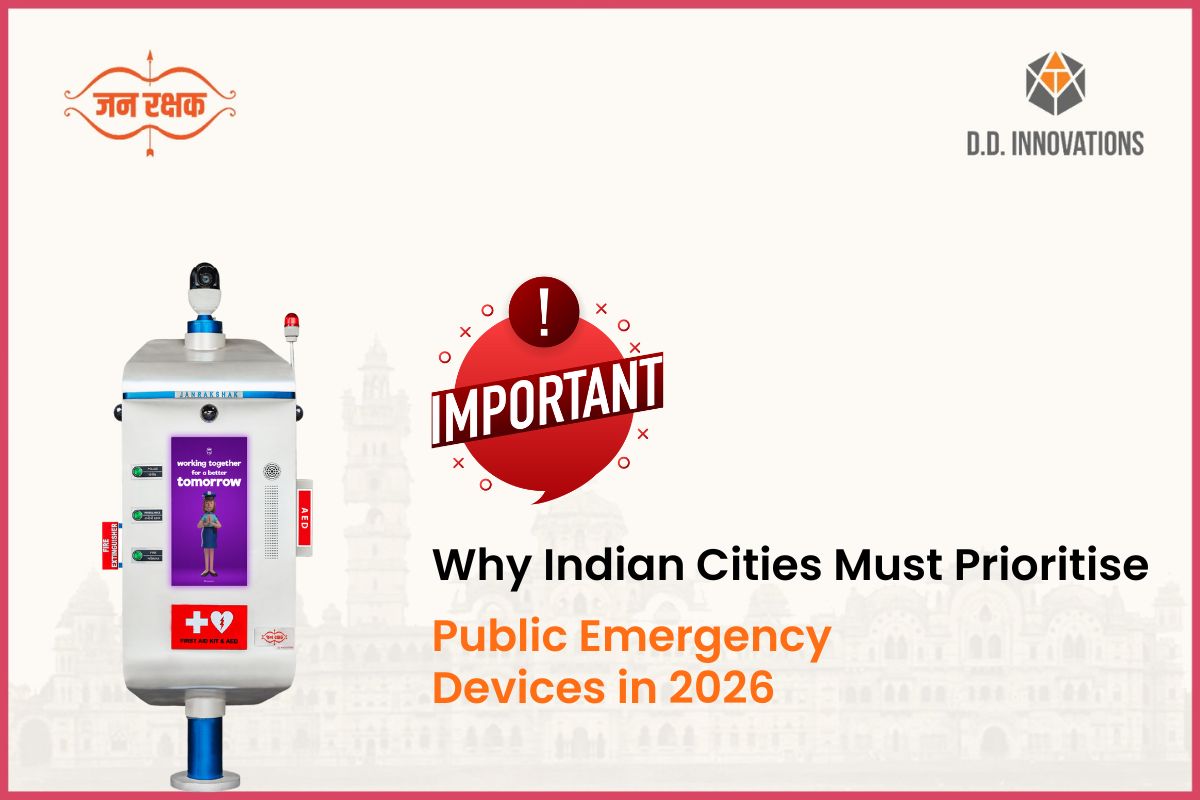
Why Indian Cities Must Priorities Public Emergency Devices in 2026 and Beyond

As Indian cities continue to expand, ensuring urban safety has become a critical priority. Rising traffic density, crowded public spaces, and increased public movement demand faster emergency response. In many situations, even a few minutes can save lives. Public Emergency Devices are now emerging as a vital part of smart city safety infrastructure.

Emergencies require immediate action. Delays increase risk, worsen outcomes, and reduce public trust. Prioritising Public Emergency Devices in 2026 and beyond is essential for saving lives, improving response efficiency, and strengthening confidence in urban governance.

Urban Growth and the Rising Risk of Emergencies

Indian cities are undergoing rapid transformation driven by infrastructure expansion, mobility projects, tourism, and population growth. While this progress creates economic opportunities, it also increases the likelihood of:

  • Road accidents
  • Medical emergencies
  • Public safety incidents
  • Crowd related risks
  • Climate and disaster related events

Traditional emergency reporting depends heavily on mobile phones, internet connectivity, and awareness of emergency numbers. In real situations involving panic, injury, language barriers, or poor network coverage, these methods often fail or cause delays.

Public Emergency Devices address this gap by offering an instant, location based alert system that works independently of personal devices.

Why Faster Emergency Response Matters

In most emergencies, the first few minutes determine the outcome. Whether it is a traffic accident, a medical crisis, or a public safety threat, a timely response can prevent loss of life and reduce the severity of harm.

Public Emergency Devices allow citizens to raise alerts instantly with minimal effort. Once activated, these systems transmit real time alerts along with accurate location details. This enables police, medical teams, and disaster response units to reach the scene quickly and act decisively.

Faster response not only saves lives but also helps control situations before they escalate further.

Enhancing Public Safety Through Smart Infrastructure

Public Emergency Devices are not just response tools. They are visible symbols of safety that reassure citizens and create a sense of preparedness in public spaces. Their presence also discourages unlawful activity by increasing the likelihood of immediate reporting and intervention.

These devices are especially important for vulnerable groups such as senior citizens, children, tourists, and individuals unfamiliar with local emergency systems. Simple design and easy accessibility ensure that anyone can seek help when needed.

Their effectiveness increases significantly when installed at:

  • Highways and accident prone road stretches
  • Transit hubs and railway stations
  • Public parks and open spaces
  • Tourist destinations
  • High footfall urban zones

Supporting Smart City and Governance Objectives

Public Emergency Devices align closely with India’s smart city and urban governance goals. They support data driven decision making by generating insights into emergency patterns, response times, and high risk locations.

By integrating these systems into city infrastructure, municipalities can improve coordination between police departments, medical services, and disaster management authorities. This integrated approach leads to better planning, optimized resource allocation, and improved accountability across agencies.

Building Citizen Confidence and Improving City Livability

Safety plays a major role in how people experience a city. When residents and visitors feel protected, they are more likely to participate in social, economic, and cultural activities.

Reliable emergency response systems increase trust in local governance and contribute directly to city livability. Public Emergency Devices send a clear message that citizen safety is a priority.

This confidence supports tourism, attracts investment, and encourages sustainable urban growth.

Preparing Indian Cities for 2026 and Beyond

As cities become more complex, emergencies will also become more unpredictable. Climate related disruptions, traffic congestion, and growing public gatherings demand resilient and adaptable safety solutions.

Public Emergency Devices offer a scalable system that can evolve alongside future urban needs. Prioritising these systems in 2026 and beyond ensures that cities are prepared not only for current challenges but also for emerging risks.

Cities that invest early in such infrastructure will be better equipped to protect lives and maintain public confidence.

Conclusion

As India’s urban landscape continues to evolve, public safety infrastructure must keep pace with new challenges. Public Emergency Devices provide immediate access to help, reduce emergency response time, and strengthen coordination among response agencies.Prioritising Public Emergency Devices will help Indian cities move toward safer, smarter, and more responsive environments. In the coming years, systems such as Jan Rakshak will play a foundational role in urban safety planning, supporting responsible governance and stronger public trust in emergency response networks

Categories
Road Safety Safe Vadodara Safety and Security Security System Security System for Public Safety in India

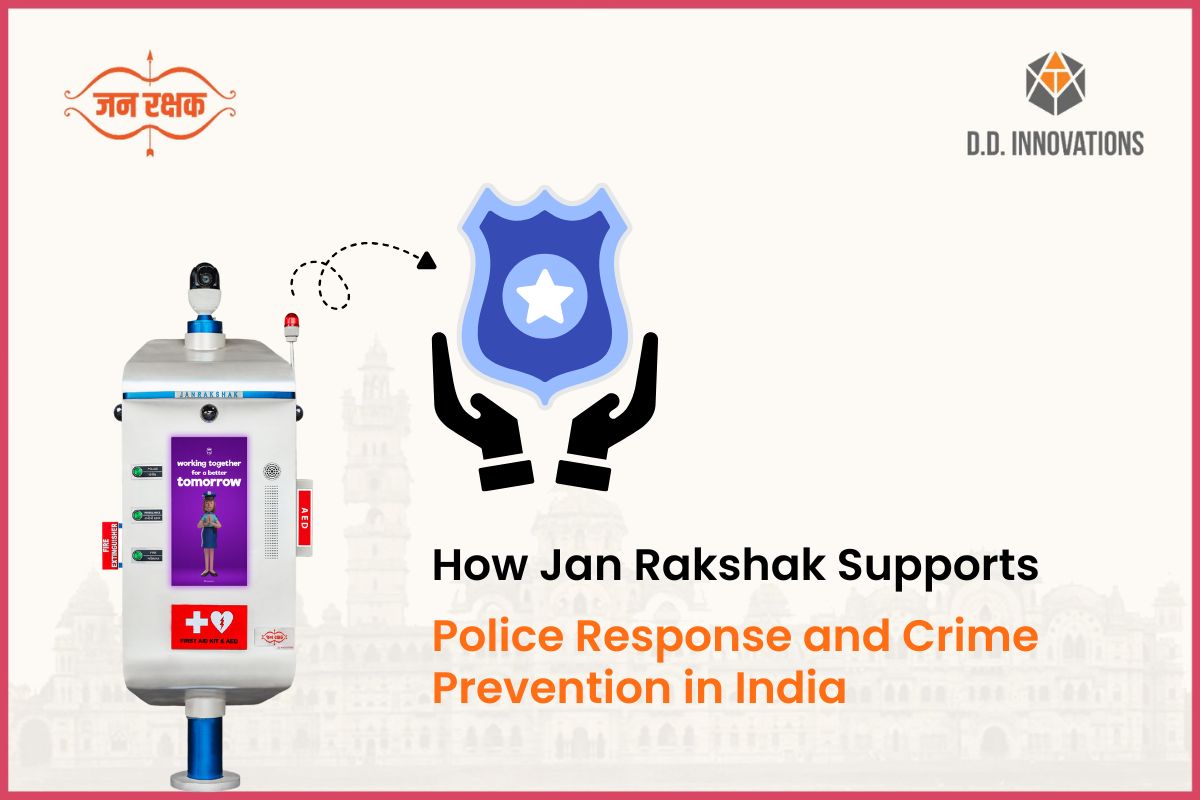
How Jan Rakshak Supports Police Response and Crime Prevention in India

Crime prevention in India has moved beyond traditional policing methods such as routine patrols and post incident investigations. With rapid urban growth, expanding highways, increased tourism, and higher public movement, law enforcement agencies face constant pressure to respond faster and more effectively.

In emergencies, time is critical. Even a short delay in reporting or reaching an incident location can allow situations to escalate, offenders to escape, or injuries to worsen. This is where Jan Rakshak plays a crucial role by strengthening the connection between citizens and police through a dependable public emergency response system.

Why Quick Response Is Critical for Crime Prevention

In most criminal incidents, the first few minutes determine the outcome. Delayed police response can lead to:

  • Escalation of violence
  • Loss of crucial evidence
  • Criminals fleeing the scene
  • Increased risk to victims and bystanders

Traditional reporting methods often rely on mobile phones, emergency numbers, or bystanders. During panic situations, accidents, or assaults, victims may be injured, disoriented, or unable to communicate clearly.

Effective crime prevention in India requires systems that reduce response time and deliver accurate, real time information to police teams. Jan Rakshak addresses this gap by offering instant emergency activation in public spaces without technical complexity.

How Jan Rakshak Improves Police Efficiency

Jan Rakshak systems are strategically installed at high risk and high movement locations such as:

  • National and state highways
  • Tourist routes and destinations
  • Accident prone road stretches
  • Crowded transit corridors
  • Isolated public areas

When activated, the system immediately sends an alert to the nearest police control room and emergency response teams. Each alert includes precise location data, eliminating delays caused by unclear directions or incomplete information.

This enables police units to reach the site faster, manage situations efficiently, and reduce the chances of offenders escaping. By minimizing dependence on phone calls and manual reporting, Jan Rakshak ensures uninterrupted access to emergency support even when victims are under stress or unable to communicate verbally.

Jan Rakshak’s Role in Preventing Crimes

Visible safety infrastructure acts as a strong deterrent to criminal activity. When public areas are equipped with emergency response systems, potential offenders are less likely to act due to the risk of immediate reporting and police intervention.

Jan Rakshak supports crime prevention in India by creating safer environments in vulnerable zones such as:

  • Lonely road stretches
  • Late night travel routes
  • Tourist heavy locations
  • Public spaces with limited surveillance

Faster reporting allows police to secure crime scenes quickly, collect timely evidence, and prevent repeat incidents in the same areas. Over time, this strengthens patrol planning, surveillance strategies, and overall public safety measures.

Empowering Citizens to Participate in Public Safety

Modern crime prevention depends on citizen participation. Jan Rakshak empowers people by providing a simple, reliable way to seek help without fear, confusion, or technical barriers.

The system is accessible to everyone, including those unfamiliar with emergency numbers, mobile apps, or digital tools. With a single action, citizens can alert authorities and receive immediate assistance.

For police departments, Jan Rakshak acts as a force multiplier. It improves response capacity without increasing manpower, optimizes resource deployment, and strengthens trust between communities and law enforcement agencies.

Impact on Public Safety and Community Confidence

When people feel safe in public spaces, confidence grows. Secure highways, safer tourist routes, and accessible emergency systems encourage economic activity, travel, and social mobility.

Jan Rakshak contributes to crime prevention in India by supporting a structured, technology driven safety network that aligns with modern policing needs. It complements existing police systems rather than replacing them, making it scalable and practical for diverse regions across the country.

Conclusion

Crime prevention in India requires proactive solutions that enable faster police response and empower citizens during emergencies. Jan Rakshak strengthens public safety by delivering instant alerts, accurate location data, and reliable support to law enforcement agencies.

By combining technology, accessibility, and visible safety infrastructure, Jan Rakshak plays a key role in preventing crimes, improving police efficiency, and building safer communities nationwide. As public safety challenges continue to evolve, technology enabled systems like Jan Rakshak will become increasingly essential to India’s safety planning and infrastructure.

Categories
About Jan Rakshak Emergency Response Systems Features For Government Inspiring Stories

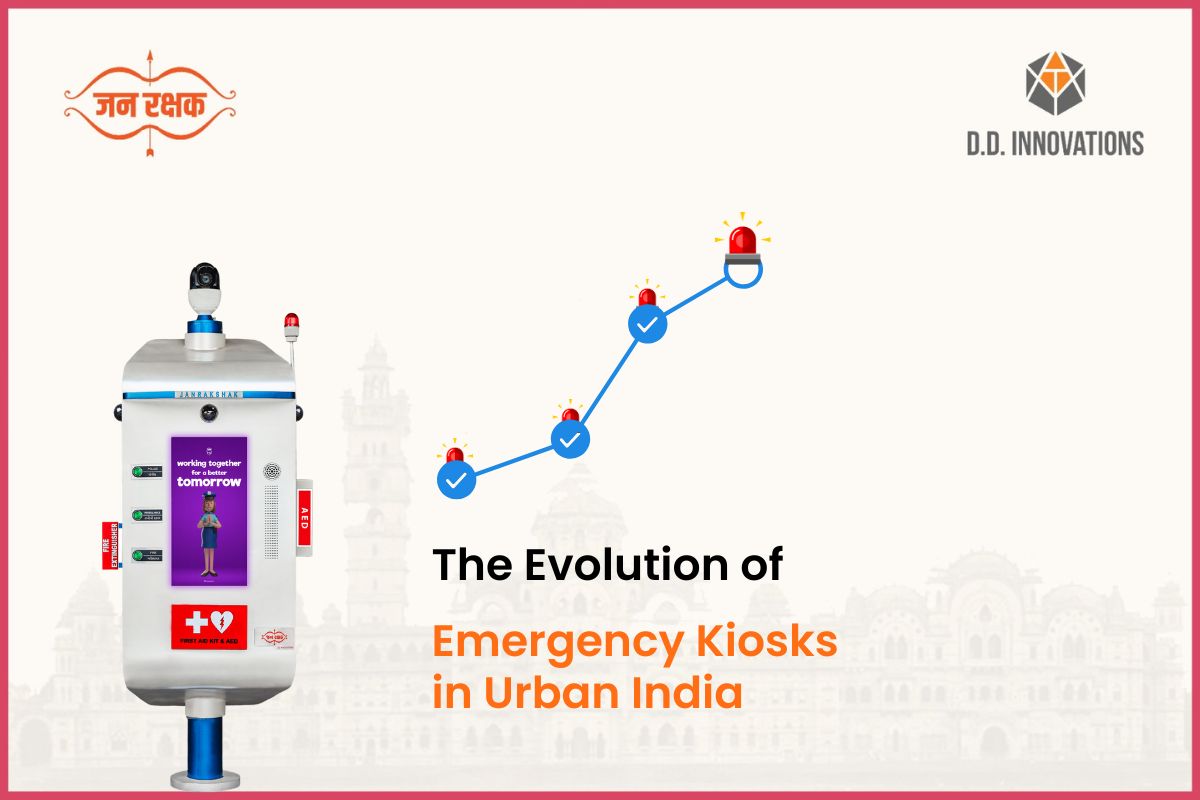
The Evolution of Emergency Kiosks in Urban India

Emergency kiosks in India are redefining how citizens access help during critical moments. As cities grow and infrastructure expands, public safety systems must evolve to keep pace with the speed and scale of urban life. This shift has led to the rise of smart emergency kiosks, a powerful innovation transforming safety across highways, campuses, parks, and public spaces.

Emergency kiosks are more than devices. They are real-time lifelines that connect citizens to help within seconds.

How Emergency Kiosks in India Have Evolved

  1. From manual booths to digital safety points

Older help systems depended completely on human availability. Police booths or emergency telephones often remained unused or inaccessible when citizens needed them most.
Digital emergency kiosks changed this reality. By offering direct connectivity to control rooms, they removed delay, improved coordination, and ensured round-the-clock accessibility.

  1. The impact of the Smart City Mission

The government’s Smart Cities Mission accelerated the shift toward connected safety systems. Emergency kiosks soon became IoT-enabled, equipped with SOS buttons, CCTV cameras, GPS tracking, sirens, and automated alert systems.
These upgrades created a reliable communication bridge between citizens and authorities, raising India’s safety standards to global levels.

  1. Designed for every citizen

Modern kiosks are built with inclusivity in mind. Large buttons, clear instructions, voice guidance, and multilingual support make them accessible for people of all ages and abilities.
Built with rugged materials, solar-powered options, and vandal-resistant structures, they perform efficiently across Indian climates and terrain.

Innovative companies like Jan Rakshak are playing a key role in developing advanced kiosks suitable for high-traffic highways, busy city streets, tourist areas, and remote locations.

  1. Turning real-time data into smarter decisions

Today’s kiosks not only respond to emergencies but also collect valuable insights on incident patterns, high-risk zones, and response times.
This data helps authorities deploy teams more effectively, anticipate risks, and plan proactive safety measures that improve city management and reduce long-term emergencies.

The Future of Emergency Kiosks in India

The next generation of kiosks will be intelligent, connected, and fully automated. AI assistance, integrated apps, two-way audio, and live analytics will make them complete safety hubs across cities and towns. These features will help citizens access help more quickly and allow administrators to manage public safety more efficiently.

Building Safer Cities with Jan Rakshak

The rise of emergency kiosks reflects India’s broader movement toward smarter, citizen-first governance. These kiosks stand as silent protectors across public spaces, delivering help exactly when it is needed.

At Jan Rakshak, we are committed to strengthening this safety ecosystem. Our intelligent, durable, and responsive emergency kiosks are designed to support communities, save lives, and build safer, better-connected cities across India.

Categories
About Jan Rakshak AED (Automated External Defibrillator) Emergency Response Systems Features For Government Inspiring Stories Introduction

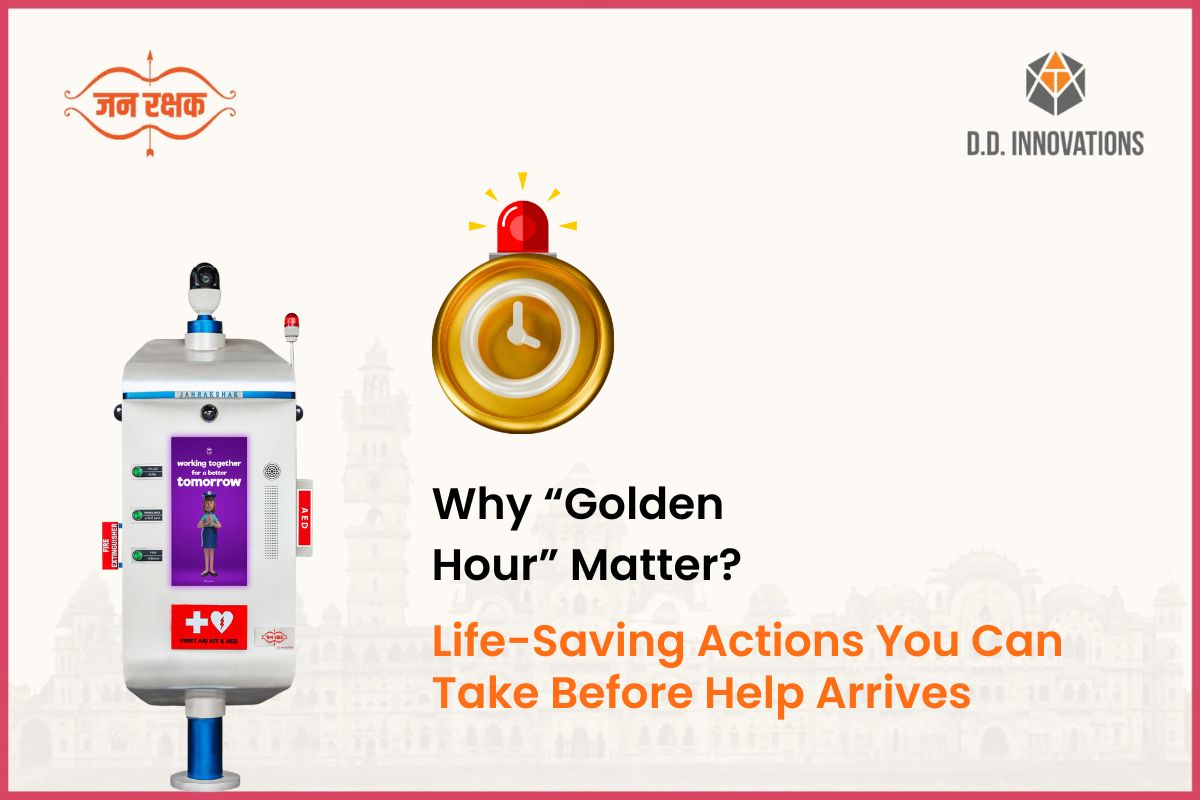
 Why “Golden Hour” Matter: Life-Saving Actions You Can Take Before Help Arrives

When an emergency strikes, be it a road accident, a cardiac arrest, or a public altercation, the first few minutes are the most critical. Medical professionals refer to these as the “Golden Hour” because they often determine the outcome between life and death. Unfortunately, most people panic or freeze, unsure of what to do during this crucial window. But with the right awareness and tools, these precious minutes can be used to stabilise the victim, alert help, and potentially save a life.

Understanding the Golden Hour

The concept of “Golden Hour” stems from trauma care, where timely intervention directly influences recovery outcomes. For example:

  • In the case of cardiac arrest, CPR within the first 3 – 5 minutes can double or triple a person’s chance of survival.
  • In road accidents, victims may suffer from internal bleeding. Delays in response can turn a manageable injury into a fatal one.
  • In fire or chemical exposure, the difference of a minute can mean preventing long-term damage to the lungs, skin, or eyes.

Time is not just a number in emergencies. It’s a decision-maker.

What You Can Do in the Golden Hour

While most people aren’t doctors, everyone can take steps to assist in a crisis. Here’s what you should keep in mind:

1. Ensure Safety First

Before rushing to help, make sure the area is safe for you and others. Check for fire, traffic, or any immediate danger.

2. Call for Help Immediately

Do not assume someone else is calling. Dial your local emergency number and provide the precise location. If a public emergency service device is nearby, use it to alert authorities instantly.

3. Don’t Crowd the Victim

This is a major issue in India. Crowds delay help and cause panic. Make space. Encourage others to stay calm and keep the area open for responders.

4. Provide Basic First Aid

  • If trained, begin CPR or apply pressure to wounds.
  • If not trained, speak calmly to the victim and keep them conscious.
  • Use any nearby public emergency service device that may provide medical kits, AED, or instructions.

5. Stay Calm and Take Control

Leadership matters. Take charge, delegate tasks, and give clear instructions. Even simple tasks like directing traffic or guiding responders to the victim can make a huge impact.

The Role of Technology in Emergency Situations

India is beginning to see the integration of tech-driven solutions in public safety. Whether it’s a fire, a medical emergency, or a public threat, quick access to aid is vital. A public emergency service device, equipped with CCTV, Emergency buttons, voice communication, an AED kit, and emergency alerts, can fill the gap between incident and intervention.

This kind of infrastructure reduces reliance on bystanders and ensures real-time communication with the nearest support systems.

Why Jan Rakshak is the Need of the Hour

In a country where emergency response time can vary widely, Jan Rakshak offers a practical and scalable solution. Installed in high-footfall and vulnerable areas like highways, college zones, temple roads, and busy junctions, Jan Rakshak acts as an on-ground safety companion.

Each unit includes:

  • One-touch emergency alert
  • Real-time camera surveillance
  • Voice assistance
  • AED + First Aid kit
  • Fire extinguisher and safety lights
  • Direct police and ambulance connection

It’s more than a device. It’s a promise that help is always near, even before the ambulance arrives.

Final Thoughts

Every second counts, and every action matters. The next time you witness an emergency, remember, you don’t have to be a hero. You just have to be prepared. Learn the basics, stay calm, and support systems that bring safety closer to every citizen.

Because saving lives doesn’t always require a cape. Sometimes, it just needs the right response during the Golden Hour.

Want to see how Jan Rakshak is redefining safety in public spaces?

Check real-life case studies and discover how this smart safety kiosk is bridging the emergency response gap across India.

Categories
Public Safety

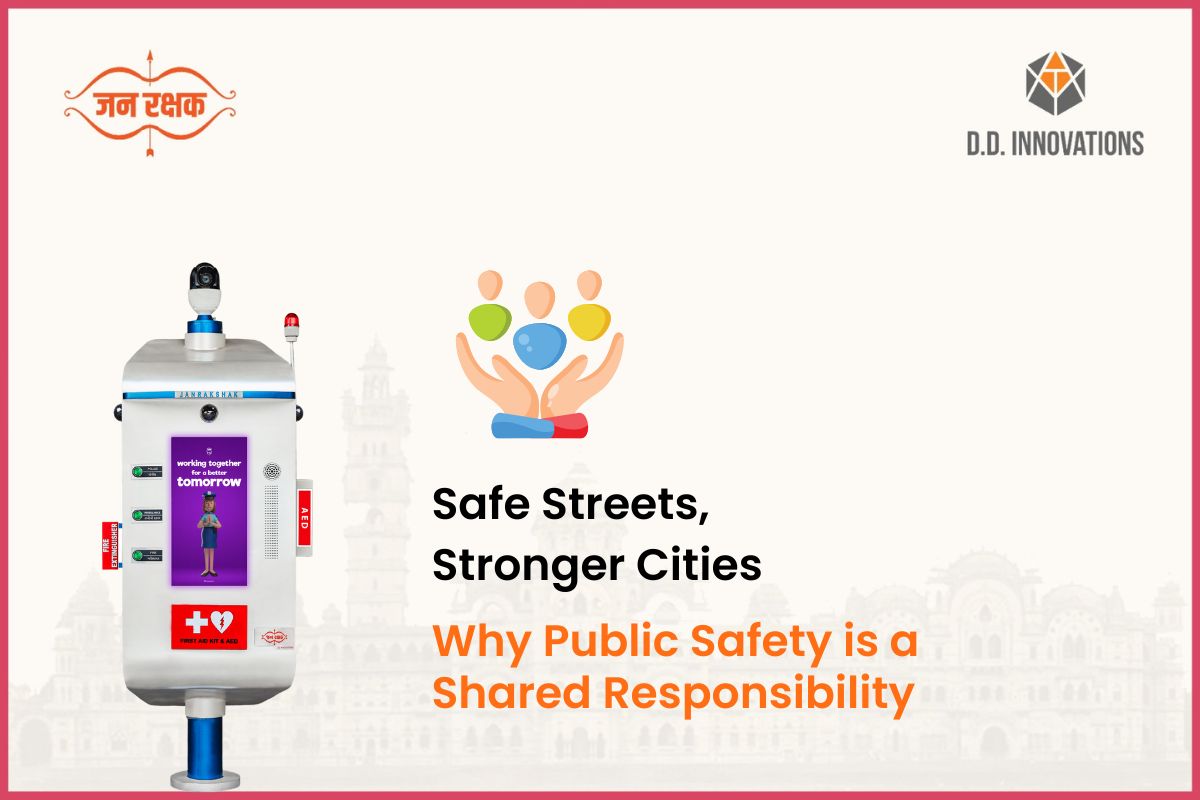
Safe Streets, Stronger Cities: Why Public Safety is a Shared Responsibility

Safety isn’t just the job of the police, government, or local authorities, it begins with us, the citizens. From following traffic rules to stepping up in emergencies, each of us plays a vital role in building safer streets and stronger communities. In a fast-growing nation like India, where urbanization is surging and public spaces are constantly buzzing with activity, public safety must be treated as a shared civic responsibility.

Understanding Public Safety: More Than Law Enforcement

Public safety refers to the protection of citizens from crimes, accidents, disasters, and emergencies in everyday spaces. This includes everything from preventing road accidents and ensuring women’s safety to being prepared for fire outbreaks or medical emergencies in public areas.

But here’s the truth: enforcement alone cannot guarantee safety. Without citizen awareness and participation, even the best systems fall short.

Why Public Safety in India Needs Everyone Involved

India ranks among the countries with the highest number of road accidents globally. According to the Ministry of Road Transport and Highways, over 1.5 lakh people lose their lives every year due to road accidents. Additionally:

  • 70% of accidents occur in urban areas, especially near intersections, bus stands, and marketplaces.
  • More than 60% of crimes against women happen in public spaces or during transit.
  • Emergency response time in Tier 1 and Tier 2 cities still averages 10–15 minutes, which can be too late during medical or fire emergencies.

These statistics highlight the urgent need for a collective, ground-level approach to improving public safety in India.

Public Safety is a Two-Way Street

Creating safe streets requires more than just policing. It needs community responsibility, consistent education, and access to safety tools. Here’s what individuals can do:

What Citizens Can Do:

  • Follow traffic signals and avoid overspeeding
  • Report suspicious behaviour or unattended items in public spaces
  • Offer help during road accidents or health emergencies
  • Use public safety devices or helplines responsibly
  • Teach children and elders about emergency numbers and safety routines
  • Install well-lit pathways and CCTV-monitored zones
  • Conduct first aid and emergency response workshops
  • Improve signage and visibility in high-traffic areas
  • Deploy smart public safety infrastructure in crowded zones
  • Encourage civic behaviour through education and local campaigns

Despite smart city investments and rising surveillance, India still struggles with:

  • Lack of accessible first aid or safety tools in public areas
  • Inconsistent street lighting and pedestrian infrastructure
  • Inadequate awareness of how to respond in emergencies
  • Limited connectivity between citizens and emergency services

Bridging these gaps will require smart infrastructure and active participation from both citizens and authorities.

To truly strengthen public safety in India, cities must embrace innovation that works for the people, with the people. This is where Jan Rakshak plays a powerful role.

Jan Rakshak is a roadside public safety unit equipped with the following features:

  • Emergency alert buttons for Police, Fire, and Ambulance
  • Built-in CCTV for real-time monitoring
  • First aid kits and AED (Automated External Defibrillator)
  • Public announcement speaker system
  • Flashing warning lights
  • Fire Extinguisher 
  • A digital awareness display

It could be placed in high-footfall areas, such as tourist spots, parks, college gates, temples, and busy chowks. Jan Rakshak serves as a visible emergency response point, accessible to anyone.

  • Empowers citizens to act during emergencies
  • Reduces response time with instant alerts to control centers
  • Protects vulnerable groups like women, children, and the elderly
  • Builds trust in public safety infrastructure

Public Safety in India can’t succeed without public participation. From something as simple as reporting a hazard to stepping up during a crisis, every citizen has a role to play.

Tools like Jan Rakshak make it easier, but only if we know how to use them and why they matter.

Let’s make a habit of staying alert, helping others, and trusting systems built for us.
Because when streets are safe, cities grow stronger and we all win.

Categories
Security System for Public Safety in India

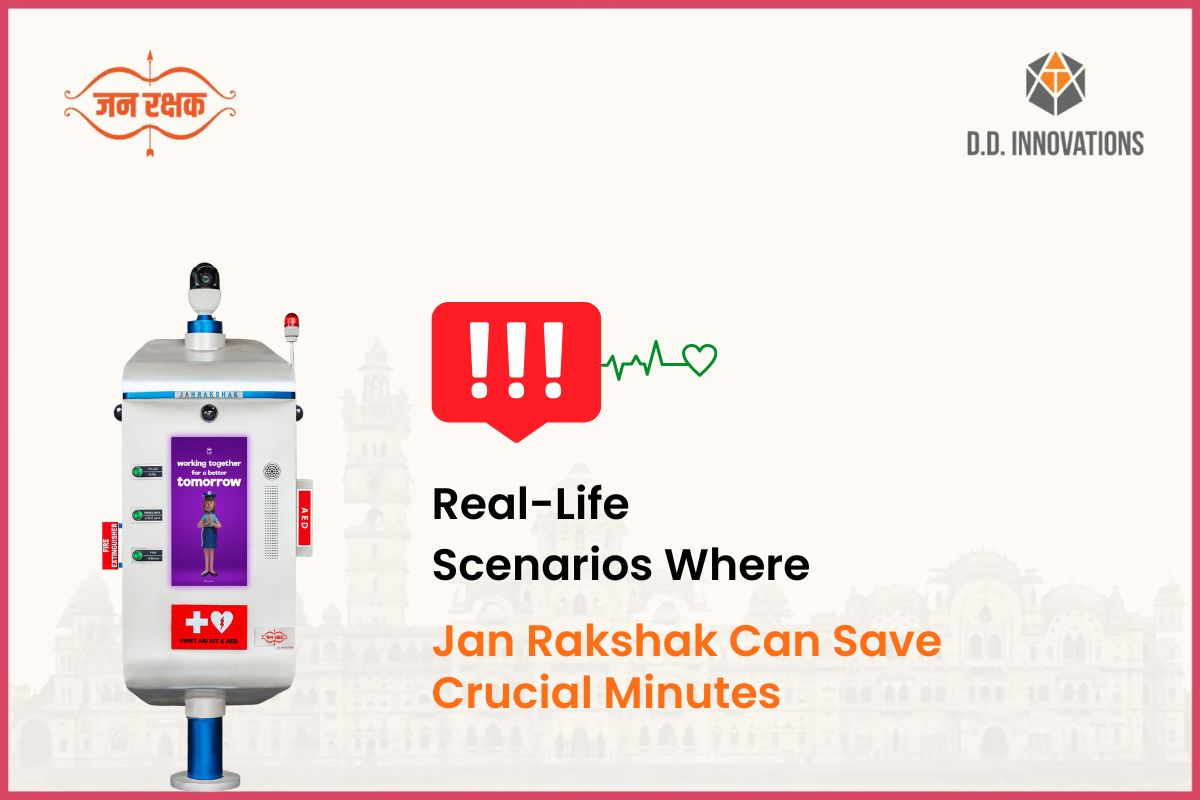
5 Real-Life Scenarios Where Jan Rakshak Can Save Crucial Minutes

In emergency situations, every second counts. Whether it’s a health crisis, a road accident, or a crime in progress, swift action can mean the difference between life and death. India, with its growing population and diverse challenges, needs a reliable Security System for public safety. That’s where Jan Rakshak comes in. This platform is designed to help citizens respond quickly and efficiently to emergencies. Let’s look at five real-life scenarios where Jan Rakshak can save crucial minutes.

1. Health Emergencies: Quick Medical Response

When a person collapses from a heart attack or severe injury, the first few minutes are crucial. Jan Rakshak allows people to access emergency medical help instantly, without having to search for contact numbers or wait for assistance. Here’s how it works:

  • Instant Alerts: Users can quickly alert emergency services or nearby ambulances.
  • First-Aid Guidance: The platform provides first-aid instructions until professional help arrives.

Jan Rakshak also has an AED for heart emergencies.

By reducing response times, Jan Rakshak can improve survival rates and prevent further complications.

2. Road Accidents: Fast Action Saves Lives

Accidents on the road are common in India, and victims need immediate medical attention. Jan Rakshak helps by:

  • Instant Reporting: Users can report accidents in real-time, sending alerts to police and medical teams.
  • Precise Location: The platform shares the exact location of the accident, allowing responders to reach the site faster.

This Security System for Public Safety in India ensures that help is on its way without delay, significantly reducing response time.

3. Fire Emergencies: Rapid Response to Save Lives

Fires can spread rapidly, whether it’s a vehicle fire on the road or a roadside incident. Every second is critical. Jan Rakshak can make a huge difference not only by:

  • Instant Fire Alerts: Users can immediately report a fire, triggering alerts to fire services, local authorities, and nearby residents.
  • Evacuation Information: The platform provides users with evacuation routes, safe zones, and nearby emergency shelters.

But also, with its built-in fire extinguisher, Jan Rakshak empowers users to take immediate action, helping to contain small fires and prevent them from escalating while professional help is on the way. By alerting the right people and providing the tools for initial response, Jan Rakshak can help reduce damage and save lives.

4. Alert Systems: Siren & Alarms for Emergency Response

In any emergency, from a medical crisis to a security threat, immediate and widespread alerts are critical. Jan Rakshak provides a powerful solution with its integrated alert systems, which are controlled by a central command center.

  • Siren and Alarms: The device is equipped with loud sirens and flashing alarms that can be activated instantly by authorized personnel at the command center once a distress signal is received. This immediately draws attention to the location, signalling a distress call to nearby people and authorities.
  • Rapid Awareness: The siren and alarm systems help to rapidly inform the public about an ongoing emergency, allowing them to take immediate safety precautions and clear the area for emergency services.

By providing a clear and loud distress signal, Jan Rakshak ensures that help arrives quickly and that the surrounding community is instantly aware of a developing situation, saving valuable time and lives.

5. Women’s Safety: Real-Time Alerts for Protection

Women’s safety remains a critical issue in India. Jan Rakshak addresses this by empowering women with a robust and immediate response system. The device features three distinct buttons for specific emergencies, allowing women to:

  • Instant Alerts: Press a button to instantly alert local authorities and the central command center, ensuring a rapid response.
  • 24/7 Surveillance: The integrated 24/7 surveillance camera provides a live feed to the command center, allowing them to assess the situation and dispatch help immediately.

By providing a direct link to authorities and constant surveillance, Jan Rakshak plays a crucial role in protecting women and improving their sense of security in public spaces.

How Jan Rakshak Enhances Public Safety

The importance of a reliable Security System for Public Safety cannot be overstated, especially in a country like India. In emergencies, swift action can prevent disasters and save lives. Jan Rakshak’s real-time alerts and direct connection to emergency services ensure that help is on its way as quickly as possible.

With the ability to report incidents in real time, access crucial information, and alert authorities, Jan Rakshak is a game-changer in public safety.

Conclusion: Every Minute Counts

In any emergency, the faster the response, the better the outcome. Jan Rakshak’s platform helps save crucial minutes, whether it’s through medical emergencies, road accidents, fire emergencies, crime prevention, or public health safety. By providing immediate access to resources, information, and support, Jan Rakshak is improving public safety across India, one minute at a time.