janrakshak

Categories
About Jan Rakshak Emergency Response Systems Features Public Safety Public safety and security device in India Safety and Security

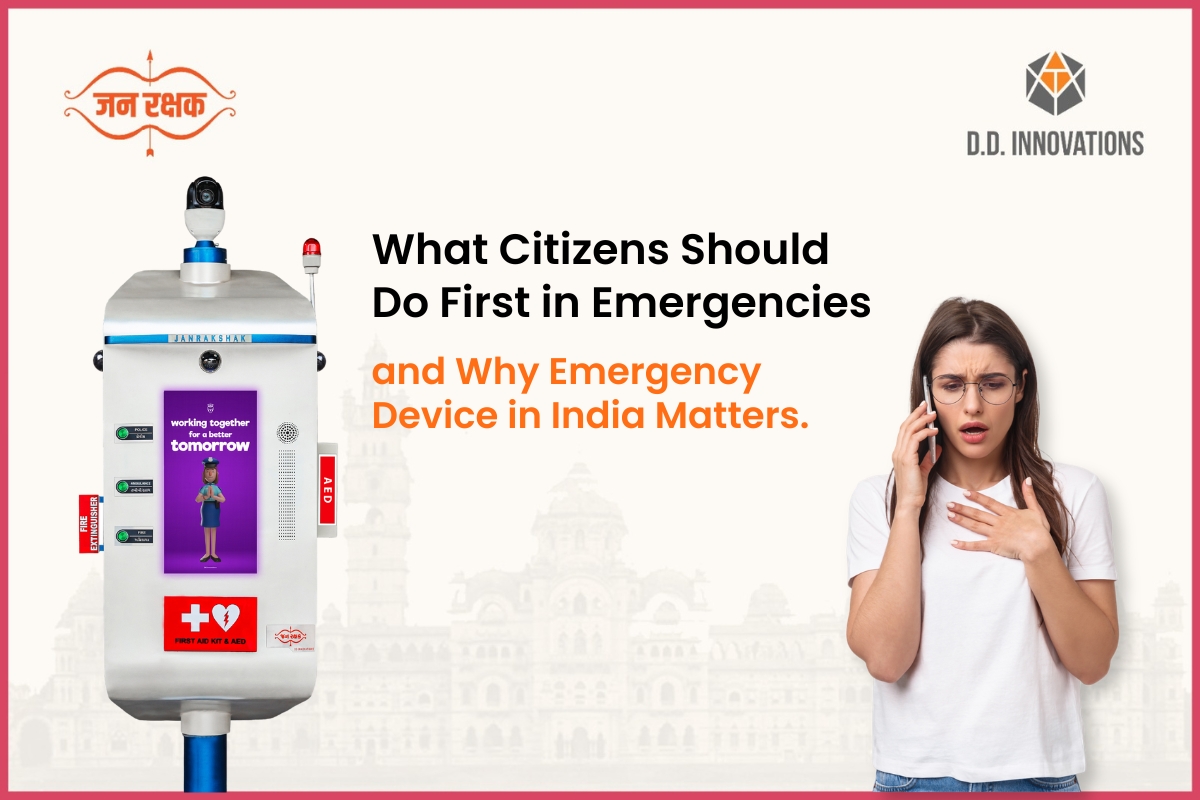
What Citizens Should Do First in Emergencies and Why Emergency Device in India Matters

Emergencies can occur without warning—whether it is a road accident, fire outbreak, medical crisis, or public safety threat. In such critical moments, the actions taken within the first few minutes often determine the outcome. Panic, confusion, and delayed communication can worsen situations, while timely response and clear decision-making can save lives.

In a rapidly urbanizing nation like India, preparedness is no longer optional. Understanding what citizens should do first during emergencies and recognizing the importance of an emergency device in India is essential for building safer and more resilient communities.

When an emergency occurs, people often experience shock or confusion, which can delay action. However, the initial response—commonly known as the “golden minutes”—plays a crucial role in minimizing damage and ensuring timely assistance.

Immediate and informed action can:

  • Prevent escalation of incidents
  • Reduce injuries and fatalities
  • Enable faster coordination with emergency services
  • Support effective rescue and evacuation efforts

Prepared citizens form the foundation of a strong public safety ecosystem.

1. Stay Calm and Assess the Situation

Remaining calm is the first and most important step. Panic can lead to poor decisions and miscommunication. Quickly assess the environment to identify potential risks and determine the type of emergency.

2. Ensure Personal Safety

Before offering help to others, ensure your own safety. Move to a secure location and avoid exposure to hazards such as fire, traffic, electrical risks, or structural damage.

3. Alert Emergency Services Immediately

Contact the appropriate emergency service without delay:

Providing clear and accurate information, including location and nature of the incident, helps authorities respond efficiently.

4. Use Available Emergency Devices

If an emergency device in India is available nearby, use it to establish direct contact with emergency services. Public emergency systems like Jan Rakshak offer one-touch connectivity, eliminating delays caused by searching for numbers or navigating phone calls.

5. Assist Victims Responsibly

If it is safe to do so, provide basic assistance such as first aid, guiding evacuees, or supporting injured individuals until professional help arrives. Avoid moving victims unnecessarily unless there is an immediate risk.

6. Guide and Inform Others

Help maintain order by guiding others to safety, preventing crowd panic, and sharing accurate information with authorities.

Limitations of Traditional Emergency Reporting:

While mobile phones have improved communication, they are not always reliable during emergencies. Network congestion, battery failure, and panic-induced miscommunication can delay assistance. Similarly, CCTV cameras only record incidents and do not provide direct

intervention.These limitations highlight the need for a reliable emergency device in India that ensures instant connectivity with emergency services, even in high-stress situations.

The Role of Emergency Devices in India
  • An emergency device in India is designed to provide immediate access to police, fire, and medical services through a simple and accessible interface. Installed in public areas such as roads, campuses, parks, transport hubs, and commercial zones, these devices act as vital emergency touchpoints.
Key benefits include:
  • Instant one-touch access to emergency services
  • Reduced response time and improved coordination
  • Reliable communication without dependence on personal devices
  • Enhanced safety in high-footfall public spaces
  • Empowerment of citizens to act during emergencies

By bridging the gap between distress and response, emergency devices play a crucial role in strengthening public safety infrastructure.

Jan Rakshak: A Smart Emergency Device in India

Jan Rakshak is an advanced public emergency response system designed to enhance citizen safety across India. Built for simplicity and reliability, the device provides direct connectivity to essential emergency services through three dedicated buttons:

  • 100 – Police
  • 101 – Fire Services
  • 108 – Ambulance

With just a single press, users can alert the relevant authorities, ensuring rapid assistance without the need for mobile connectivity or technical expertise. Installed at strategic locations such as highways, educational institutions, marketplaces, and transport hubs, Jan Rakshak transforms public spaces into secure and responsive environments.

Building Safer Communities Through Awareness

Safety is a shared responsibility. When citizens are aware of emergency protocols and have access to reliable emergency devices, communities become more resilient and prepared.

The integration of an emergency device in India supports:

  • Smart city and urban safety initiatives
  • Disaster preparedness and crisis management
  • Protection for women, children, and senior citizens
  • Institutional and municipal safety compliance
  • Public confidence in safety infrastructure

Empowered citizens, supported by smart technology, form the backbone of a secure society.

Conclusion

Emergencies demand swift action, clarity, and coordination. Knowing what to do first—stay calm, ensure safety, alert authorities, and assist responsibly—can significantly reduce risks and save lives.

As India continues to urbanize, integrating reliable public safety solutions becomes essential. An emergency device in India provides immediate access to emergency services, minimizes response time, and strengthens the nation’s safety infrastructure.

Solutions like Jan Rakshak demonstrate how technology can empower citizens and enhance emergency preparedness. In moments of crisis, a single press of a button can initiate life-saving support.To learn more about implementing advanced emergency safety solutions in your region, visit janrakshak.in and take a proactive step toward building safer communities across India.

FAQS
What should citizens do first during an emergency?

Stay calm, assess the situation, ensure personal safety, and immediately alert emergency services.

What is an emergency device in India?

It is a public safety system that provides direct, one-touch connectivity to police, fire, and ambulance services.

How does Jan Rakshak improve emergency response?

Jan Rakshak enables instant communication with emergency authorities, reducing response time and improving coordination.

Where are emergency devices typically installed?

They are installed at highways, campuses, public parks, transport hubs, marketplaces, and commercial areas.

Why are emergency devices important for smart cities?

They enhance urban safety, support crisis management, and contribute to resilient and secure smart city infrastructure.
Categories
About Jan Rakshak Emergency Response Systems Features Public Safety Public safety and security device in India Safety and Security

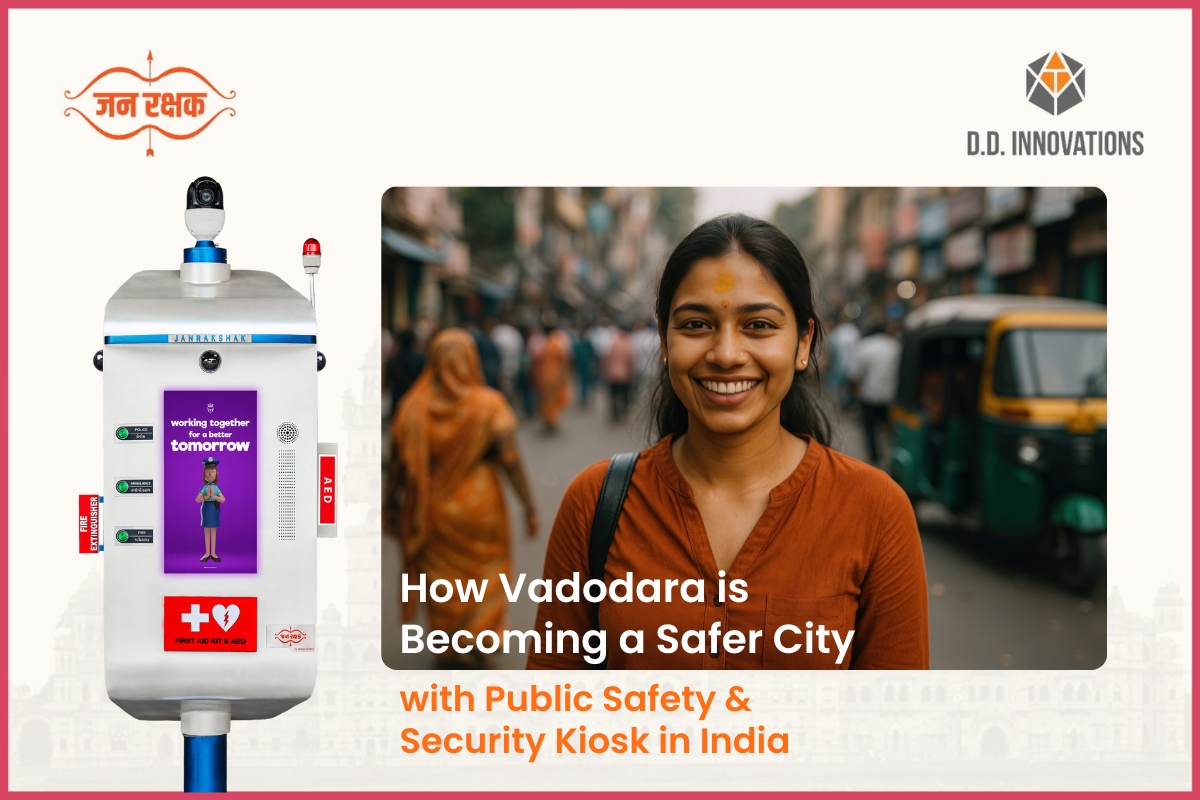
How Vadodara is Becoming a Safer City with Public Safety & Security Kiosk in India

Introduction: Vadodara Leading the Way in Urban Safety

Vadodara, one of Gujarat’s most progressive and culturally rich cities, is rapidly emerging as a model of smart and secure urban development. Known for its educational institutions, thriving industries, and vibrant public spaces, the city is now pioneering innovative public safety initiatives. A significant contributor to this transformation is the installation of the Public Safety & Security Kiosk In India, an advanced emergency response system designed to provide immediate assistance during critical situations.

As urban populations expand and public spaces become busier, safety becomes a top priority. Vadodara’s adoption of smart public safety infrastructure reflects its commitment to building a secure, responsive, and citizen-centric environment for residents and visitors alike.

The Need for Smart Public Safety in Growing Cities

Rapid urbanization has transformed Vadodara into a bustling city with increasing traffic, commercial activity, and public gatherings. With growth comes the responsibility to address challenges such as road accidents, medical emergencies, fire incidents, and security threats.Traditional safety measures like CCTV surveillance and manual reporting systems provide monitoring but often lack real-time responsiveness. In emergency situations, delays in communication can lead to critical consequences. This highlights the importance of integrating a Public Safety & Security Kiosk In India—a system designed to provide immediate and direct access to emergency services.

What is a Public Safety & Security Kiosk?

A Public Safety & Security Kiosk In India is a smart emergency response unit that connects individuals directly with emergency services such as police, fire, and ambulance. Installed in public areas, these kiosks act as immediate points of contact during emergencies, reducing response time and eliminating communication barriers.

Vadodara’s implementation of such kiosks demonstrates how technology-driven solutions can enhance urban safety and support smart city initiatives across India.

Jan Rakshak: Enhancing Vadodara’s Safety Infrastructure

At the heart of Vadodara’s safety transformation is Jan Rakshak, an advanced public emergency system designed specifically for Indian conditions. Its intuitive three-button interface ensures immediate connectivity with emergency services:

  • 100 – Police
  • 101 – Fire Services
  • 108 – Ambulance

With just a single press, citizens can connect directly to the relevant control centre, eliminating delays caused by searching for numbers or navigating call transfers. The presence of this Public Safety & Security Kiosk In India empowers individuals, reduces response time, and strengthens coordination between emergency agencies.

Strategic Installations Across Vadodara

To maximize effectiveness, Jan Rakshak kiosks have been strategically installed at prominent and high-footfall locations throughout Vadodara, including:

  • Busy traffic junctions and highways
  • Educational institutions and university campuses
  • Public parks and recreational zones
  • Tourist destinations and marketplaces
  • Commercial complexes and shopping centres
  • Public transport hubs and bus terminals

These visible safety units not only provide immediate access to emergency services but also act as strong deterrents against crime and misconduct.

Empowering Citizens Through Accessible Technology

One of the defining features of the Public Safety & Security Kiosk In India is its accessibility. Designed for simplicity, the system can be used by anyone—students, senior citizens, visitors, or bystanders—without requiring technical knowledge or mobile connectivity.

This inclusive approach empowers citizens to act during emergencies, transforming them into active participants in public safety. Vadodara’s initiative reflects a shift from reactive safety measures to proactive, community-driven protection.

Supporting Smart City and Urban Safety Initiatives

Vadodara’s adoption of advanced safety solutions aligns with India’s Smart City Mission and broader urban modernization goals. Smart infrastructure extends beyond digital connectivity and transportation; it also includes intelligent safety systems that ensure rapid crisis response.

The Public Safety & Security Kiosk In India contributes to:

  • Faster emergency response times
  • Improved coordination between police, fire, and medical services
  • Enhanced public confidence in safety infrastructure
  • Strengthened urban security and crisis management
  • Inclusive protection for women, children, and senior citizens

By integrating such solutions, Vadodara is setting an example for other cities across the country.

Building Confidence and Community Trust

Visible safety infrastructure plays a vital role in building trust among citizens and visitors. The presence of emergency kiosks reassures people that help is always within reach, fostering a sense of security in public spaces.

For municipal authorities, educational institutions, and commercial establishments, implementing the Public Safety & Security Kiosk In India demonstrates a proactive commitment to public welfare, safety compliance, and social responsibility.

Vadodara: A Model for Safer Indian Cities

Vadodara’s journey toward becoming a safer city showcases how technology and governance can work together to protect lives. By integrating advanced emergency systems like Jan Rakshak into its urban landscape, the city is creating a secure and responsive environment for all.

As other cities across India seek to enhance their safety infrastructure, Vadodara stands as a shining example of how smart innovation can transform public protection and urban resilience.

Conclusion

A truly modern city is defined not only by its infrastructure but by the safety and confidence it offers its citizens. Vadodara’s adoption of the Public Safety & Security Kiosk In India marks a significant step toward building a resilient, inclusive, and secure urban future.

With solutions like Jan Rakshak, public spaces are no longer passive environments—they are equipped to respond instantly to emergencies. By empowering citizens and strengthening emergency response systems, Vadodara is paving the way for safer, smarter cities across India.To learn more about implementing advanced public safety solutions in your city, visit janrakshak.in and discover how Jan Rakshak is shaping the future of urban safety in India.

FAQs

1. What is a Public Safety & Security Kiosk in India?
A Public Safety & Security Kiosk is a smart emergency response system that connects citizens directly to police, fire, and ambulance services for immediate assistance.

2. How does Jan Rakshak improve public safety in Vadodara?
Jan Rakshak provides one-touch access to emergency services, ensuring faster response times and improved coordination between authorities.

3. Where are public safety kiosks installed in Vadodara?
They are strategically placed at traffic junctions, educational institutions, parks, marketplaces, and public transport hubs.

4. Who can use a Public Safety & Security Kiosk?
Anyone—including citizens, visitors, students, and bystanders—can use the kiosk during emergencies without requiring technical knowledge.5. How do safety kiosks support Smart City initiatives?
They enhance urban security, improve emergency response efficiency, and contribute to safer, smarter, and more resilient infrastructure.

Categories
Emergency Response Systems Public Safety Public safety and security device in India Road Safety

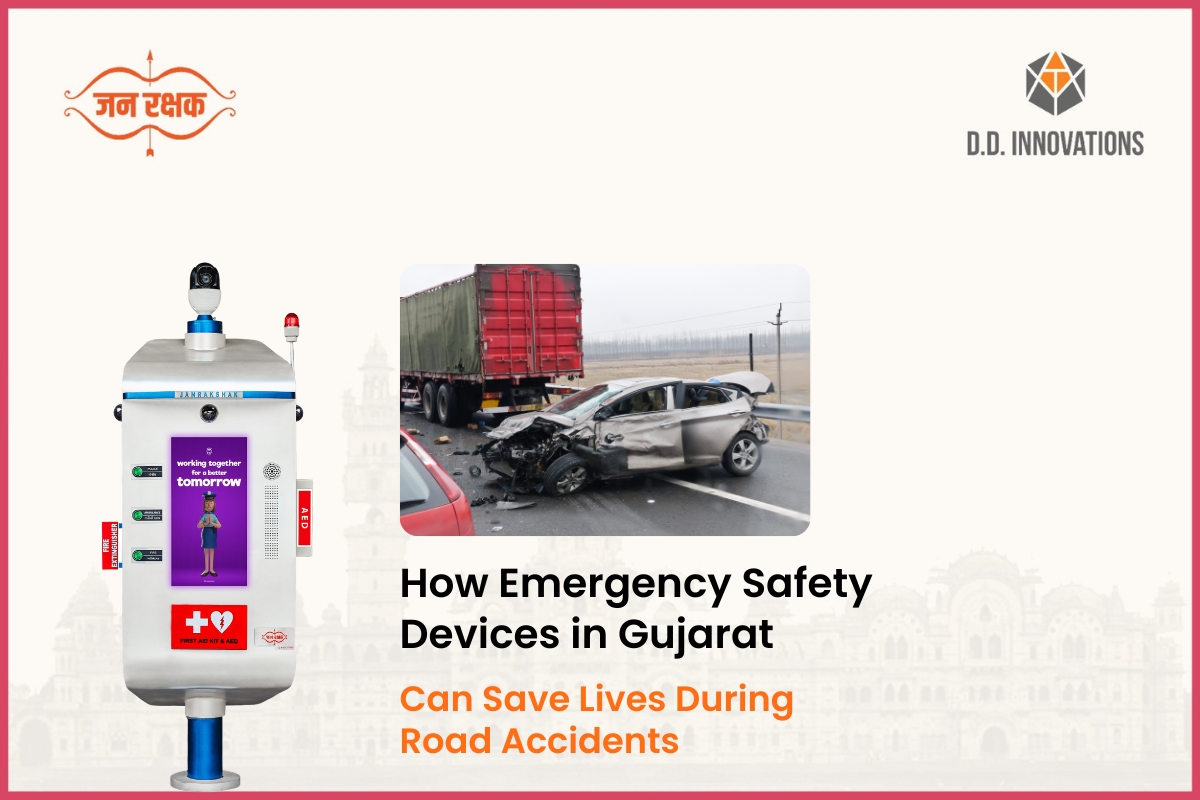
How Emergency Safety Devices in Gujarat Can Save Lives During Road Accidents

Gujarat’s expanding highways, industrial corridors, and rapidly growing urban roads reflect the state’s economic strength. From commuters in Ahmedabad and Surat to heavy vehicles moving across Vadodara and Bharuch, traffic movement is constant. But with increased mobility comes increased risk. Road accidents remain a serious public safety concern across the state.

In such situations, survival does not depend only on medical expertise. It depends on how quickly emergency services are alerted. This is where Emergency Safety Devices in Gujarat play a critical role in saving lives.

The First Few Minutes After an Accident

When a road accident occurs, the situation can quickly become chaotic. Victims may be unconscious or severely injured. Bystanders may feel unsure about what action to take. Traffic congestion may further complicate rescue efforts.

Common challenges at accident sites include:

 • Confusion about emergency numbers
• Difficulty identifying or explaining the exact location
• Network issues on highways or remote stretches
• Panic leading to unclear communication
• Delayed coordination between emergency services

Even when emergency teams are efficient, delays in reporting often slow down the entire rescue chain. Faster alerts directly translate into faster medical care.

Why Immediate Reporting Is Essential

Medical professionals emphasize the importance of the golden hour in trauma cases. Timely stabilization and hospital transfer during this critical window significantly improve survival rates and reduce long-term complications.

Traditional reporting methods rely heavily on mobile phone calls. However, during high-stress situations, communication can become unclear or incomplete. In some highway zones, connectivity may also be unreliable.

Emergency Safety Devices in Gujarat are designed to eliminate these barriers by providing direct, structured access to emergency authorities without unnecessary steps.

Jan Rakshak: A Smart Public Emergency Solution

Jan Rakshak is a dedicated public emergency response system built for quick action. Its simple three-button interface ensures immediate contact with emergency services:

 100 – Police
101 – Fire Services
108 – Ambulance

In the event of a road accident, pressing the 108 button instantly connects to ambulance services. If the situation involves fire risk, fuel leakage, or traffic obstruction, the relevant emergency service can be contacted immediately.

There is no need to search for contact numbers or navigate through call transfers. This direct connection reduces response time and improves coordination between agencies.

Strategic Placement in High-Risk Zones

For maximum effectiveness, Emergency Safety Devices in Gujarat should be installed at:

 • Highway intersections
• Accident-prone stretches
• Industrial corridors
• Toll plazas
• Urban traffic junctions
• Public transport hubs

Given Gujarat’s strong industrial and logistics network, such infrastructure becomes especially important. Visible emergency devices along major routes create safer travel corridors across the state.

Encouraging Responsible Public Action

One of the biggest barriers during accidents is hesitation among bystanders. Many people are unsure about how to help or fear becoming involved.

A publicly accessible emergency device simplifies the process. Instead of managing calls or coordinating details, a bystander can immediately alert authorities with a single button press. This encourages quick action and promotes a culture of shared responsibility.

Strengthening Gujarat’s Safety Infrastructure

Gujarat has invested significantly in infrastructure development and smart city initiatives. However, true smart infrastructure includes integrated safety systems that enable rapid crisis response.

Emergency Safety Devices in Gujarat strengthen the road safety ecosystem by:

 • Reducing reporting delays
• Improving inter-agency coordination
• Enhancing public confidence
• Supporting proactive accident management

They transform roads from reactive spaces into prepared and responsive environments.

Conclusion

Road accidents cannot always be prevented, but their impact can be minimized with faster and smarter emergency systems. When every second counts, immediate access to police, fire, and ambulance services can save lives.

By deploying advanced Emergency Safety Devices in Gujarat, authorities and institutions can significantly improve emergency readiness across the state.

Jan Rakshak offers a practical and accessible solution that bridges the gap between accident and action. In moments of crisis, a single press of a button can initiate life-saving support.

To strengthen road safety infrastructure in your region, visit janrakshak. in and explore how Jan Rakshak can help build safer roads across Gujarat.

Categories
About Jan Rakshak Emergency Response Systems Features For Government Inspiring Stories Public Safety Public safety and security device in India

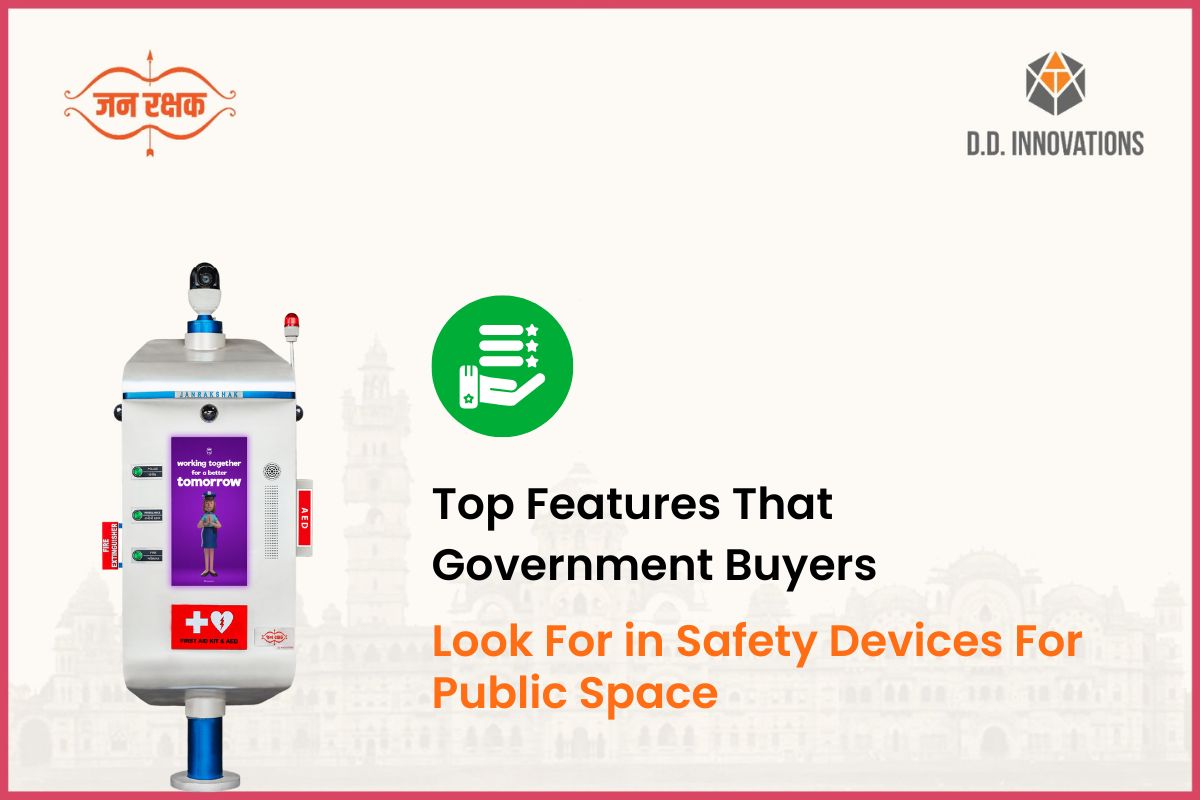
 Top Features That Government Buyers Look For in Safety Devices For Public Space

Public safety is a top priority for every government authority, whether at city intersections, highways, or tourist destinations. Investing in reliable safety devices for public spaces is not just about compliance; it’s about building safer, smarter, and more responsive communities. When government departments evaluate such technologies, they focus on innovation, reliability, and measurable impact on citizen safety.

Below are the top features that most government buyers consider essential when choosing safety devices for their communities.

1. Instant Communication During Emergencies

In an emergency, every second counts. Devices equipped with one-touch emergency alerts, panic buttons, and two-way communication channels are highly preferred. They enable citizens to instantly connect with control rooms, police stations, or medical response teams, ensuring help reaches faster and lives are saved.

2. Durability and Weather Resistance

Public spaces are constantly exposed to harsh conditions, including heat, rain, dust, and continuous public use. Government agencies seek equipment built with industrial-grade materials, anti-corrosion coatings, and vandal-resistant construction to ensure long-term reliability and functionality.

Safety installations, such as Jan Rakshak kiosks, are engineered to withstand extreme outdoor conditions while maintaining year-round operational efficiency.

3. Power Autonomy, Connectivity, and Smart Energy Management

Governments increasingly prefer self-sustaining systems that operate seamlessly, even during power outages. Solar-powered or battery-backed devices ensure uninterrupted functionality in both urban and off-grid areas. Connectivity through GSM, 4G/5G, or IoT networks enables real-time data sharing with central monitoring systems, an essential feature for smart-city integration.

Energy-efficient components and low-maintenance design further reduce operational costs for municipalities and local bodies, supporting sustainability goals.

4. Accessibility and Inclusiveness

A safety device must serve every citizen, regardless of age, language, or ability. Multilingual voice prompts, tactile buttons, and clear visual indicators make devices user-friendly and inclusive. Accessibility is not just a feature; it reflects a commitment to equality and community care.

5. Integration With Existing Infrastructure

Governments prefer devices that integrate smoothly with existing city systems. Compatibility with CCTV surveillance, emergency helplines, and disaster-management networks ensures unified coordination during critical events. Seamless integration also allows faster deployment and reduces infrastructure costs.

6. Reliable Support and Maintenance

Beyond installation, continuous performance is key. Devices backed by reliable after-sales service, periodic software updates, and quick technical support are highly valued. Long-term maintenance contracts and warranty coverage build trust and ensure consistent uptime in public infrastructure.

Empowering Safer Communities With Smart Innovation

As India’s cities and towns transition to smarter, more connected infrastructure, the demand for intelligent, durable, and responsive safety systems continues to increase.

At Jan Rakshak, we design advanced safety devices for public spaces that combine emergency response, rugged construction, and intelligent monitoring, ensuring every citizen feels protected wherever they are. From highways to urban hubs, Jan Rakshak kiosks stand as silent guardians of public safety.

Categories
Public Safety

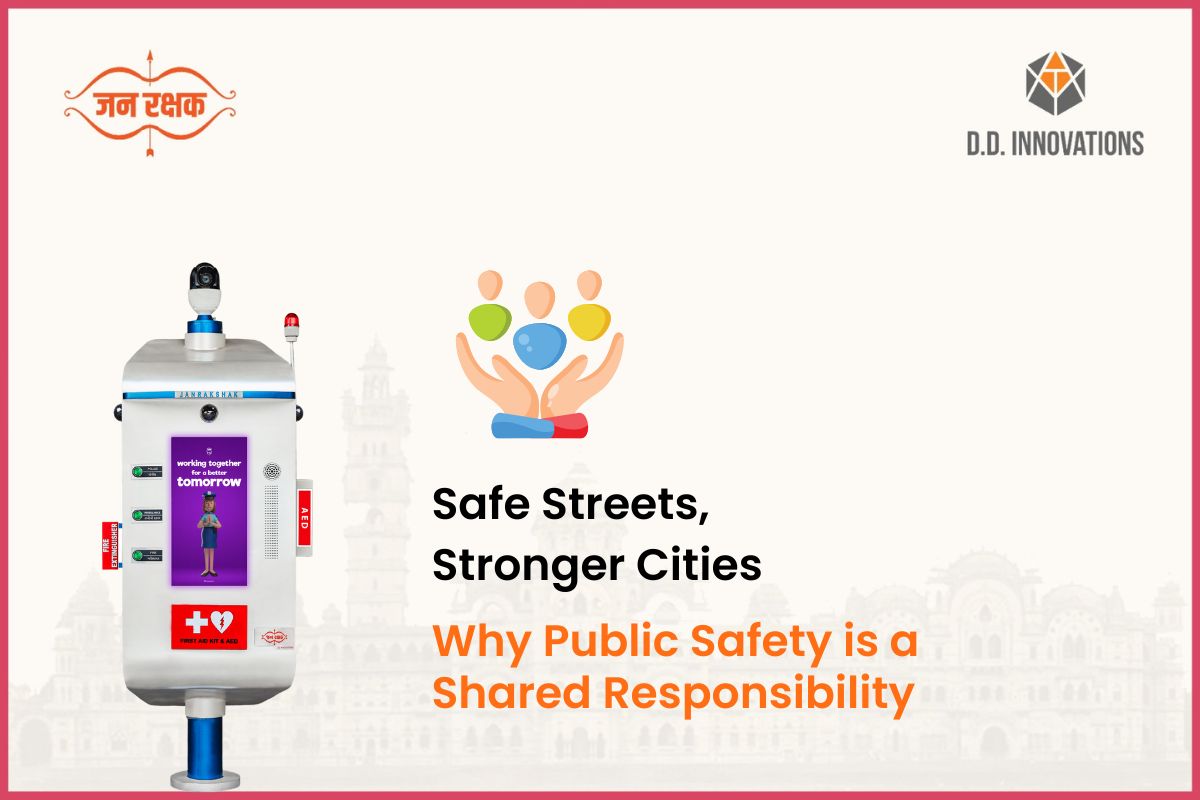
Safe Streets, Stronger Cities: Why Public Safety is a Shared Responsibility

Safety isn’t just the job of the police, government, or local authorities, it begins with us, the citizens. From following traffic rules to stepping up in emergencies, each of us plays a vital role in building safer streets and stronger communities. In a fast-growing nation like India, where urbanization is surging and public spaces are constantly buzzing with activity, public safety must be treated as a shared civic responsibility.

Understanding Public Safety: More Than Law Enforcement

Public safety refers to the protection of citizens from crimes, accidents, disasters, and emergencies in everyday spaces. This includes everything from preventing road accidents and ensuring women’s safety to being prepared for fire outbreaks or medical emergencies in public areas.

But here’s the truth: enforcement alone cannot guarantee safety. Without citizen awareness and participation, even the best systems fall short.

Why Public Safety in India Needs Everyone Involved

India ranks among the countries with the highest number of road accidents globally. According to the Ministry of Road Transport and Highways, over 1.5 lakh people lose their lives every year due to road accidents. Additionally:

  • 70% of accidents occur in urban areas, especially near intersections, bus stands, and marketplaces.
  • More than 60% of crimes against women happen in public spaces or during transit.
  • Emergency response time in Tier 1 and Tier 2 cities still averages 10–15 minutes, which can be too late during medical or fire emergencies.

These statistics highlight the urgent need for a collective, ground-level approach to improving public safety in India.

Public Safety is a Two-Way Street

Creating safe streets requires more than just policing. It needs community responsibility, consistent education, and access to safety tools. Here’s what individuals can do:

What Citizens Can Do:

  • Follow traffic signals and avoid overspeeding
  • Report suspicious behaviour or unattended items in public spaces
  • Offer help during road accidents or health emergencies
  • Use public safety devices or helplines responsibly
  • Teach children and elders about emergency numbers and safety routines
  • Install well-lit pathways and CCTV-monitored zones
  • Conduct first aid and emergency response workshops
  • Improve signage and visibility in high-traffic areas
  • Deploy smart public safety infrastructure in crowded zones
  • Encourage civic behaviour through education and local campaigns

Despite smart city investments and rising surveillance, India still struggles with:

  • Lack of accessible first aid or safety tools in public areas
  • Inconsistent street lighting and pedestrian infrastructure
  • Inadequate awareness of how to respond in emergencies
  • Limited connectivity between citizens and emergency services

Bridging these gaps will require smart infrastructure and active participation from both citizens and authorities.

To truly strengthen public safety in India, cities must embrace innovation that works for the people, with the people. This is where Jan Rakshak plays a powerful role.

Jan Rakshak is a roadside public safety unit equipped with the following features:

  • Emergency alert buttons for Police, Fire, and Ambulance
  • Built-in CCTV for real-time monitoring
  • First aid kits and AED (Automated External Defibrillator)
  • Public announcement speaker system
  • Flashing warning lights
  • Fire Extinguisher 
  • A digital awareness display

It could be placed in high-footfall areas, such as tourist spots, parks, college gates, temples, and busy chowks. Jan Rakshak serves as a visible emergency response point, accessible to anyone.

  • Empowers citizens to act during emergencies
  • Reduces response time with instant alerts to control centers
  • Protects vulnerable groups like women, children, and the elderly
  • Builds trust in public safety infrastructure

Public Safety in India can’t succeed without public participation. From something as simple as reporting a hazard to stepping up during a crisis, every citizen has a role to play.

Tools like Jan Rakshak make it easier, but only if we know how to use them and why they matter.

Let’s make a habit of staying alert, helping others, and trusting systems built for us.
Because when streets are safe, cities grow stronger and we all win.