janrakshak

Categories
About Jan Rakshak Emergency Response Systems

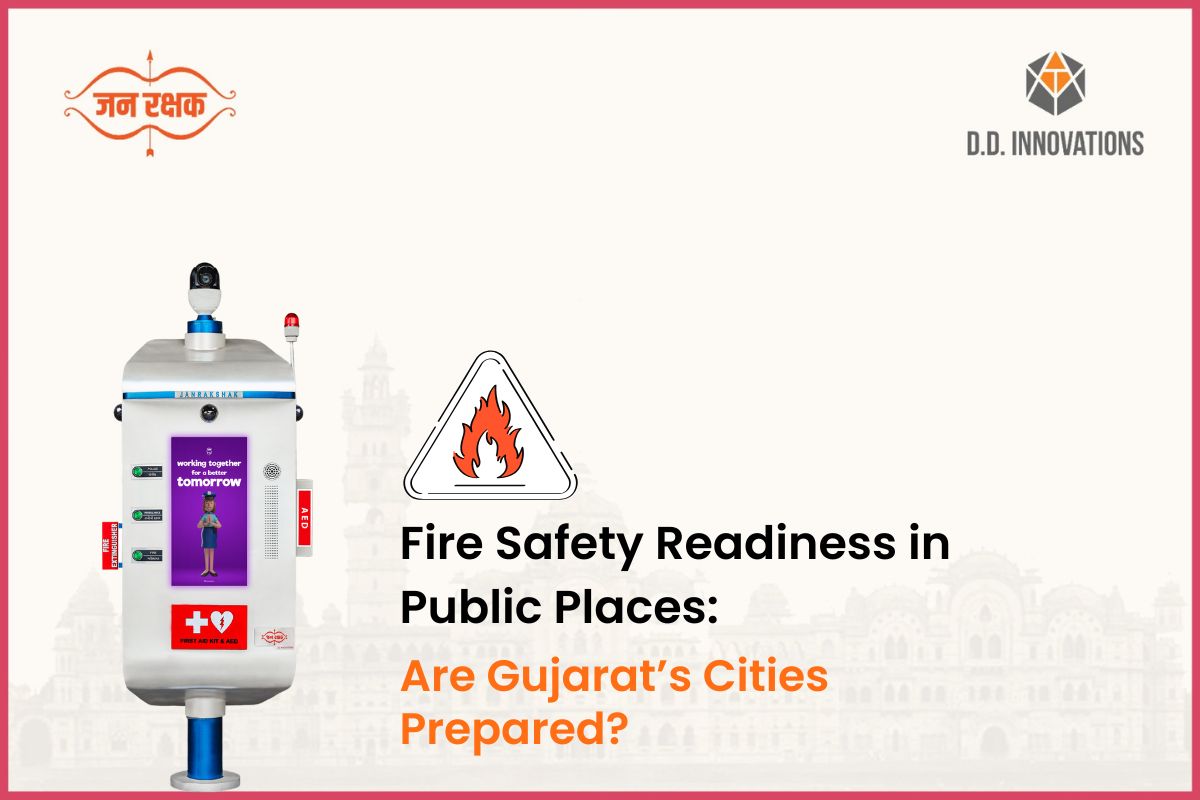
Fire Safety Readiness in Public Places: Are Gujarat’s Cities Prepared?

Gujarat’s rapid urban growth has transformed its cities into thriving commercial, industrial, and educational hubs. High-rise buildings, malls, IT parks, hospitals, and transport terminals now define the skylines of cities such as Ahmedabad, Surat, Vadodara, and Rajkot. But as infrastructure expands, one critical question remains: Is fire safety preparedness evolving at the same pace?

In emergencies, preparedness is not measured by equipment alone. It is measured by how quickly help can be activated. This is where the role of an Emergency safety device in Gujarat becomes crucial.

The Increasing Complexity of Fire Emergencies

Modern public spaces are more crowded and technologically dependent than ever before. Air conditioning systems, elevators, heavy electrical loads, kitchens in commercial complexes, and storage of flammable materials increase fire vulnerability.

Some common challenges include:

  • Delayed reporting of fire outbreaks
  • Panic during evacuation
  • Confusion about emergency contact numbers
  • Poor coordination between first responders
  • Lack of immediate alert systems in public zones

Even when fire departments are efficient, delays often occur at the reporting stage. Those first few minutes are critical in containing damage..

Many buildings rely on CCTV cameras and internal fire alarms. While these systems help detect incidents, they do not always ensure a rapid external response. CCTV cameras record events but do not directly alert fire authorities. Manual phone calls require clear communication, which may be difficult in a panic situation.

This gap between detection and direct response highlights the need for a more integrated solution. An Emergency safety device installed in public areas in Gujarat can bridge this gap by enabling an instant connection to fire services.

How Smart Emergency Devices Improve Fire Readiness

Modern public emergency systems, such as Jan Rakshak, are designed to provide immediate, one-touch access to emergency services.

The device features three direct emergency buttons:

  • 100 for Police
  • 101 for Fire Brigade
  • 108 for Ambulance

In the event of a fire, pressing the 101 button immediately connects the user to the fire control centres. This eliminates the need to search for numbers, explain routing, or navigate through call transfers.

The result is faster mobilisation of firefighting teams and improved chances of damage control.

Strengthening Safety in High-Footfall Areas

Public places that require enhanced fire safety preparedness include:

  • Shopping centres and multiplexes
  • Schools and colleges
  • Hospitals and healthcare facilities
  • Industrial estates
  • Public transport terminals
  • Government offices

Supporting Smart City Initiatives

Gujarat has been actively promoting smart city development. True smart infrastructure is not limited to digital connectivity or modern architecture. It also includes intelligent safety systems that respond in real time.

Emergency devices integrated into public infrastructure enhance overall crisis management capabilities. They reduce dependency on manual reporting and streamline coordination between citizens and emergency services.

By adopting advanced emergency systems, Gujarat’s cities can strengthen their position as not only economically advanced but also safety-conscious urban centres.

Creating Confidence Among Citizens

Visible safety infrastructure builds public confidence. When people see accessible emergency response units installed in public areas, they feel more secure.

For business owners and institutions, installing such systems demonstrates commitment to safety compliance and social responsibility. It reassures visitors, employees, and residents that emergency preparedness is taken seriously.

Preparing for the Future

As urban density increases and public spaces become more complex, fire risks may evolve. Proactive preparedness is the only sustainable approach.

An Emergency safety device in Gujarat is not just a technological addition. It is a preventive measure that enhances coordination, reduces response time, and protects lives.

Conclusion

Fire safety readiness is not defined by response after damage occurs. It is defined by the ability to act instantly when an emergency begins.

Gujarat has made remarkable progress in development, but strengthening fire preparedness through smart public safety systems is the next critical step. Integrating solutions like Jan Rakshak into public spaces can significantly enhance emergency response efficiency.

For institutions, municipalities, and businesses looking to upgrade their fire safety infrastructure, investing in modern emergency response systems is not just a compliance requirement. It is a responsibility toward protecting lives.

To explore how Jan Rakshak can enhance fire safety preparedness in your city, visit https://www.janrakshak.in/ and learn more about implementing advanced emergency solutions across Gujarat.
Categories
About Jan Rakshak Emergency Response Systems

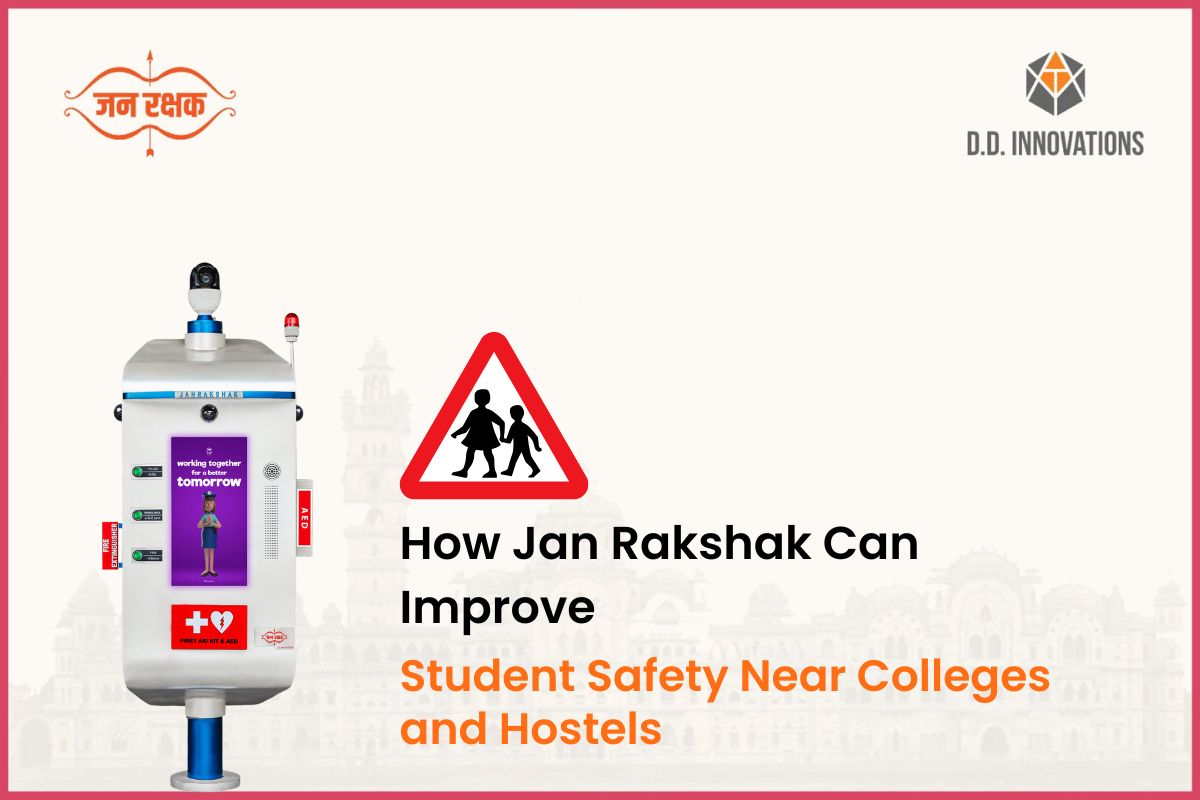
How Jan Rakshak Can Improve Student Safety Near Colleges and Hostels

Student life should be focused on education, growth, and new opportunities. However, concerns around safety near colleges and hostels continue to rise across India. Crowded public areas, late-night study routines, isolated hostel locations, and increasing urban risks make it essential to strengthen security infrastructure in educational zones.

In this scenario, installing a reliable safety device for public spaces is no longer a luxury. It has become a necessity. Jan Rakshak offers a smart, proactive solution designed to improve emergency response around campuses and hostels.

Understanding the Safety Challenges Around Colleges

Colleges and hostels face multiple safety risks daily. These include:

  • Late-night student movement
  • Medical emergencies inside hostels
  • Road accidents near campus gates
  • Fire incidents in buildings
  • Harassment or security threats in surrounding areas

In many cases, the biggest challenge is not the incident itself, but the delay in reporting it. Students under stress may struggle to dial emergency numbers, explain their location clearly, or contact the right department quickly.

Traditional systems, such as CCTV cameras, only record events. They do not provide immediate assistance. What educational institutions truly need is an active safety device for public areas that ensures instant response.

How Jan Rakshak Enhances Campus Safety

Jan Rakshak is designed as an integrated emergency response unit. When installed at strategic locations such as college entrances, hostel gates, parking areas, bus stops, and nearby public roads, it creates accessible emergency touchpoints for students.

Tri-Button Smart Emergency System

The device includes three dedicated emergency buttons:

  • 100 – Police
  • 101 – Fire Services
  • 108 – Ambulance

Instead of navigating through phone calls or searching for contact numbers, students can simply press the relevant button. The system connects directly to the relevant control centre, eliminating unnecessary delays.

This streamlined communication ensures faster response during critical situations.

Immediate Assistance During Emergencies

Whether it is a sudden medical emergency inside a hostel, a road accident near campus, or a fire outbreak, Jan Rakshak ensures that emergency services receive immediate alerts.

The system communicates essential information quickly and efficiently, reducing confusion and response time. In emergencies, every minute matters. A reliable safety device for public spaces helps bridge the gap between distress and rescue.

Empowering Students to Take Action

One of the most powerful aspects of Jan Rakshak is empowerment. It does not rely solely on security personnel. Any student, staff member, or passerby can activate the system during an emergency.

This creates a community-driven safety environment where:

  • Victims can seek help instantly
  • Friends can respond during emergencies
  • Bystanders can report unfolding dangers

By placing emergency response within reach, campuses become safer and more responsive.

Visible Deterrence Against Crime

The visible presence of emergency devices around campuses also acts as a deterrent. When offenders see clearly marked safety systems connected directly to authorities, the likelihood of misconduct decreases.

Installing Jan Rakshak demonstrates that student safety is a priority and that response systems are active and accessible.

Bridging the Safety Gap Around Hostels

Many hostels are located slightly away from main campuses or in semi-isolated areas. These zones often experience slower response times and limited monitoring.

Jan Rakshak addresses this gap by serving as an immediate point of contact for emergencies. Its simple design ensures ease of use for students, visitors, and staff alike, regardless of technical familiarity.

Supporting Institutional Responsibility

Educational institutions have a responsibility to provide a secure environment for students. Installing a reliable safety device in public spaces near colleges and hostels demonstrates a proactive commitment to student well-being.

It also enhances:

  • Parent confidence
  • Institutional reputation
  • Crisis preparedness
  • Compliance with safety standards

Modern campuses must integrate smart safety systems into their infrastructure planning.

The Future of Safer Educational Zones in India

As India continues to expand its educational infrastructure, safety solutions must evolve alongside it. Smart public emergency systems are becoming essential components of campus planning.

Jan Rakshak is not just a device. It is a complete emergency response solution designed for Indian conditions. It bridges the gap between panic and protection, ensuring help reaches students when they need it most.

Conclusion

Student safety should never depend on chance or delayed response. Whether facing a medical emergency, fire risk, or security threat, immediate access to help can save lives.

By installing Jan Rakshak, a trusted safety device for public spaces, colleges and hostels can create an environment where students feel secure, parents feel reassured, and institutions fulfil their duty of care.

To learn more about implementing Jan Rakshak near your campus, visit https://www.janrakshak.in/ and explore how smart safety solutions can transform student protection.

Categories
About Jan Rakshak AED (Automated External Defibrillator) Emergency Response Systems Features For Government Inspiring Stories

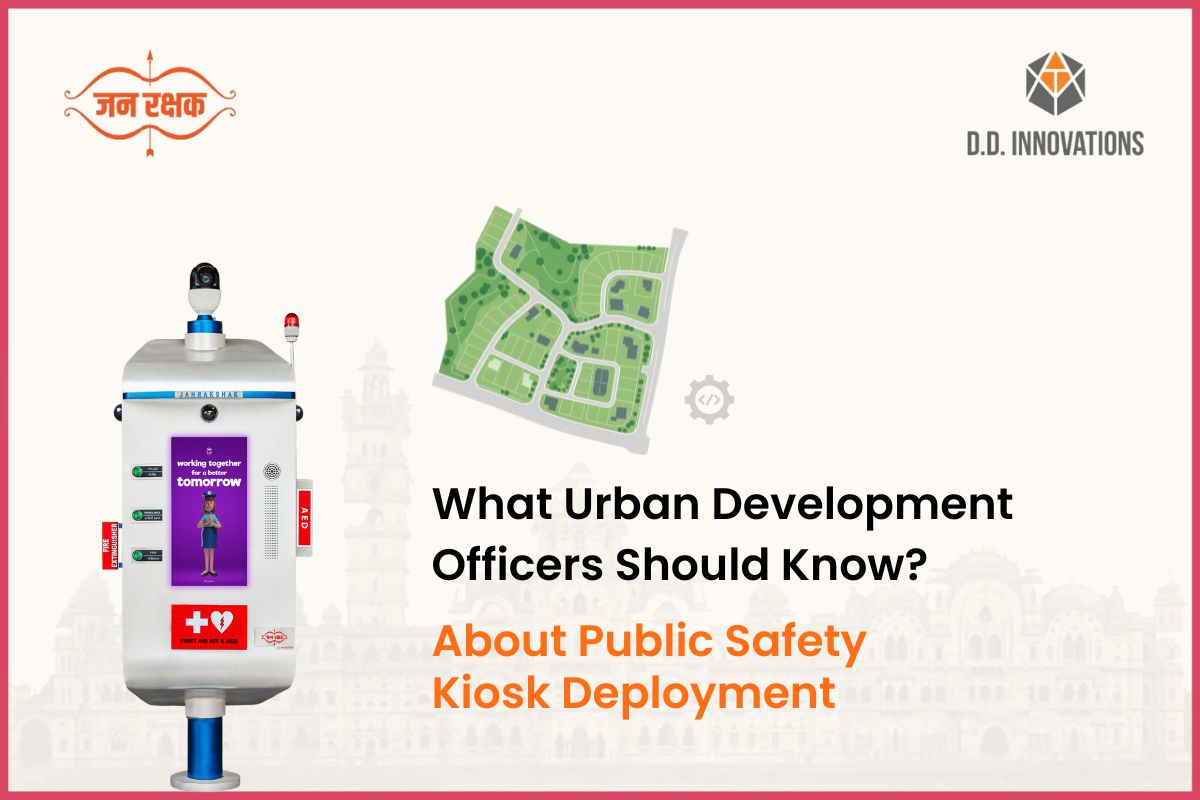
What Urban Development Officers Should Know About Public Safety Kiosk Deployment

As cities in India continue to expand rapidly, the responsibility to ensure citizen safety has never been greater. From crowded junctions and public parks to transport hubs and educational zones, every urban space must now be designed not only for efficiency but also for safety.
This is where smart, tech-driven solutions like a Public Safety Kiosk come into play, bridging the critical gap between citizens and emergency responders.

For urban development officers, understanding how to plan, deploy, and integrate such kiosks into the city’s infrastructure is becoming a key component of modern governance.

The Evolving Need for On-Ground Safety Infrastructure

According to data from the Ministry of Road Transport and Highways, more than 4 lakh road accidents occur in India annually. In many cases, victims don’t receive timely help due to the lack of nearby emergency systems.
Urban planners are now realizing that while technology powers cities, it should also protect them.
A well-placed Public Safety Kiosk can provide immediate access to police, ambulance, and fire services, helping reduce emergency response time significantly.

The focus of city planning must now shift from post-incident management to proactive safety design, embedding public safety devices directly into the civic ecosystem.

Key Factors Urban Development Officers Must Consider

Before deploying emergency kiosks, urban officers and contractors need to evaluate several important factors to ensure long-term impact and operational success.

1. Location Priority

Kiosks should be placed in high-footfall and high-risk areas such as:

  • Bus terminals and metro stations
  • College and school entrances
  • Religious places and public parks
  • Major intersections and highway rest zones
  • Tourist spots and marketplaces

Strategic placement ensures that help is never far away when someone needs it most.

2. Connectivity and Integration

A Public Safety Kiosk should be integrated with the city’s command center for real-time communication.

This enables live monitoring, two-way audio-visual interaction, and automatic alerts to nearby emergency services.

Ensuring reliable power backup and network connectivity is essential for uninterrupted functioning.

3. Maintenance and Responsiveness

Once installed, the kiosk should not become a forgotten unit. Regular maintenance checks, component upgrades, and monitoring logs must be part of the city’s standard operating plan. Periodic audits help ensure that the system is always functional when it truly matters.

4. Accessibility for All

The design must be intuitive and usable by people of all ages and abilities, from children to senior citizens. Features like emergency buttons, clear visual indicators, and voice assistance make the system inclusive.

5. Community Awareness

Even the most advanced system loses its purpose if people are unaware of how to use it. City officers must collaborate with local schools, NGOs, and residents’ associations to educate the public about kiosk functionality and its benefits.

How Smart Cities Can Leverage Safety Kiosks

With initiatives like Smart City Mission, Indian cities are evolving into digital ecosystems. Integrating safety kiosks into these frameworks can strengthen emergency preparedness while demonstrating transparency and technological progress.

By aligning kiosk deployment with CSR initiatives and public-private partnerships, cities can optimize budgets and accelerate implementation timelines.

Why Jan Rakshak Leads the Way

Among the emerging solutions, Jan Rakshak stands out as a practical and reliable safety innovation for urban environments. Designed and manufactured in India, it combines advanced emergency tools with a user-friendly interface.

Each unit includes:

  • Direct alert buttons for police, ambulance, and fire departments
  • Live CCTV and command center connectivity
  • AED Box, first aid kit, and fire extinguisher
  • Public announcement speaker and digital display for awareness messages

Deployed in high-footfall zones across Gujarat, Jan Rakshak ensures that help is always just one press away, turning urban safety from a plan into a promise.

Final Thought

As India’s cities continue to modernize, safety must evolve alongside infrastructure. For urban development officers, integrating devices like Jan Rakshak is not just about compliance, it’s about creating a future where no citizen feels helpless in an emergency.

Because true progress is measured not by how fast a city grows, but by how safely its people live.

Categories
Public Safety

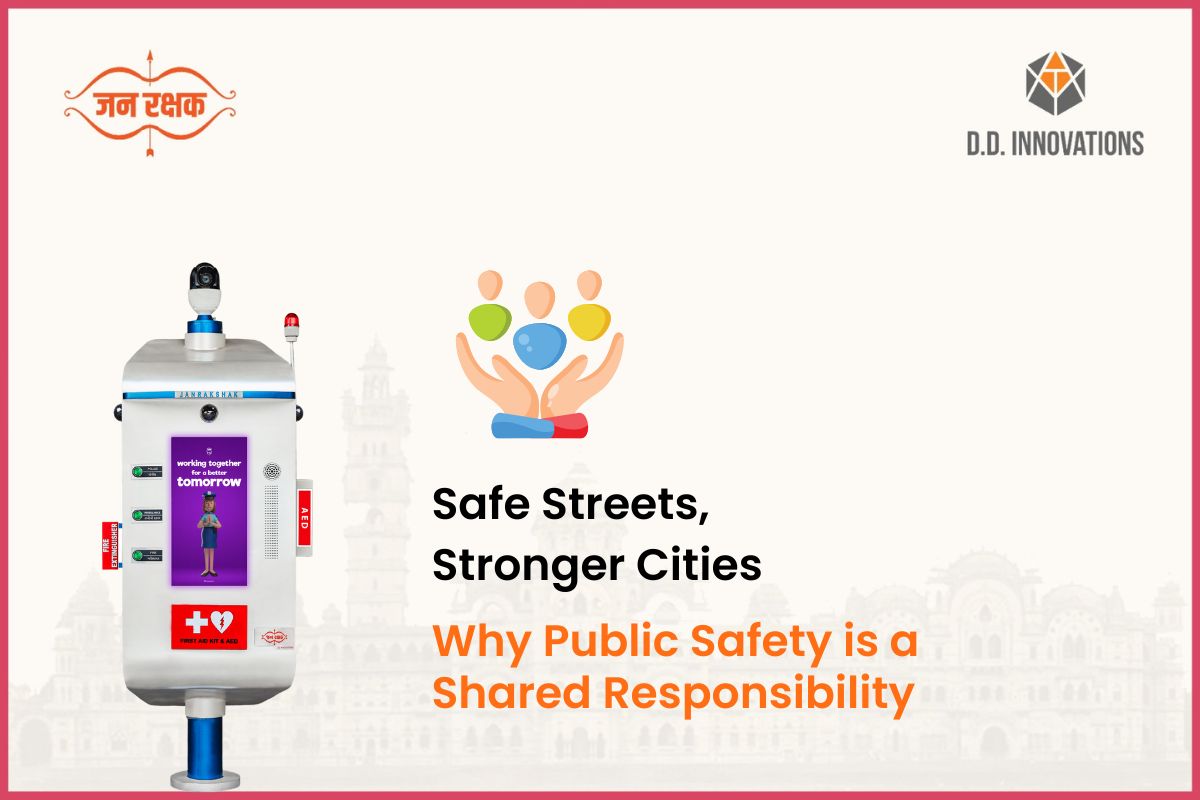
Safe Streets, Stronger Cities: Why Public Safety is a Shared Responsibility

Safety isn’t just the job of the police, government, or local authorities, it begins with us, the citizens. From following traffic rules to stepping up in emergencies, each of us plays a vital role in building safer streets and stronger communities. In a fast-growing nation like India, where urbanization is surging and public spaces are constantly buzzing with activity, public safety must be treated as a shared civic responsibility.

Understanding Public Safety: More Than Law Enforcement

Public safety refers to the protection of citizens from crimes, accidents, disasters, and emergencies in everyday spaces. This includes everything from preventing road accidents and ensuring women’s safety to being prepared for fire outbreaks or medical emergencies in public areas.

But here’s the truth: enforcement alone cannot guarantee safety. Without citizen awareness and participation, even the best systems fall short.

Why Public Safety in India Needs Everyone Involved

India ranks among the countries with the highest number of road accidents globally. According to the Ministry of Road Transport and Highways, over 1.5 lakh people lose their lives every year due to road accidents. Additionally:

  • 70% of accidents occur in urban areas, especially near intersections, bus stands, and marketplaces.
  • More than 60% of crimes against women happen in public spaces or during transit.
  • Emergency response time in Tier 1 and Tier 2 cities still averages 10–15 minutes, which can be too late during medical or fire emergencies.

These statistics highlight the urgent need for a collective, ground-level approach to improving public safety in India.

Public Safety is a Two-Way Street

Creating safe streets requires more than just policing. It needs community responsibility, consistent education, and access to safety tools. Here’s what individuals can do:

What Citizens Can Do:

  • Follow traffic signals and avoid overspeeding
  • Report suspicious behaviour or unattended items in public spaces
  • Offer help during road accidents or health emergencies
  • Use public safety devices or helplines responsibly
  • Teach children and elders about emergency numbers and safety routines
  • Install well-lit pathways and CCTV-monitored zones
  • Conduct first aid and emergency response workshops
  • Improve signage and visibility in high-traffic areas
  • Deploy smart public safety infrastructure in crowded zones
  • Encourage civic behaviour through education and local campaigns

Despite smart city investments and rising surveillance, India still struggles with:

  • Lack of accessible first aid or safety tools in public areas
  • Inconsistent street lighting and pedestrian infrastructure
  • Inadequate awareness of how to respond in emergencies
  • Limited connectivity between citizens and emergency services

Bridging these gaps will require smart infrastructure and active participation from both citizens and authorities.

To truly strengthen public safety in India, cities must embrace innovation that works for the people, with the people. This is where Jan Rakshak plays a powerful role.

Jan Rakshak is a roadside public safety unit equipped with the following features:

  • Emergency alert buttons for Police, Fire, and Ambulance
  • Built-in CCTV for real-time monitoring
  • First aid kits and AED (Automated External Defibrillator)
  • Public announcement speaker system
  • Flashing warning lights
  • Fire Extinguisher 
  • A digital awareness display

It could be placed in high-footfall areas, such as tourist spots, parks, college gates, temples, and busy chowks. Jan Rakshak serves as a visible emergency response point, accessible to anyone.

  • Empowers citizens to act during emergencies
  • Reduces response time with instant alerts to control centers
  • Protects vulnerable groups like women, children, and the elderly
  • Builds trust in public safety infrastructure

Public Safety in India can’t succeed without public participation. From something as simple as reporting a hazard to stepping up during a crisis, every citizen has a role to play.

Tools like Jan Rakshak make it easier, but only if we know how to use them and why they matter.

Let’s make a habit of staying alert, helping others, and trusting systems built for us.
Because when streets are safe, cities grow stronger and we all win.

Categories
Security System for Public Safety in India

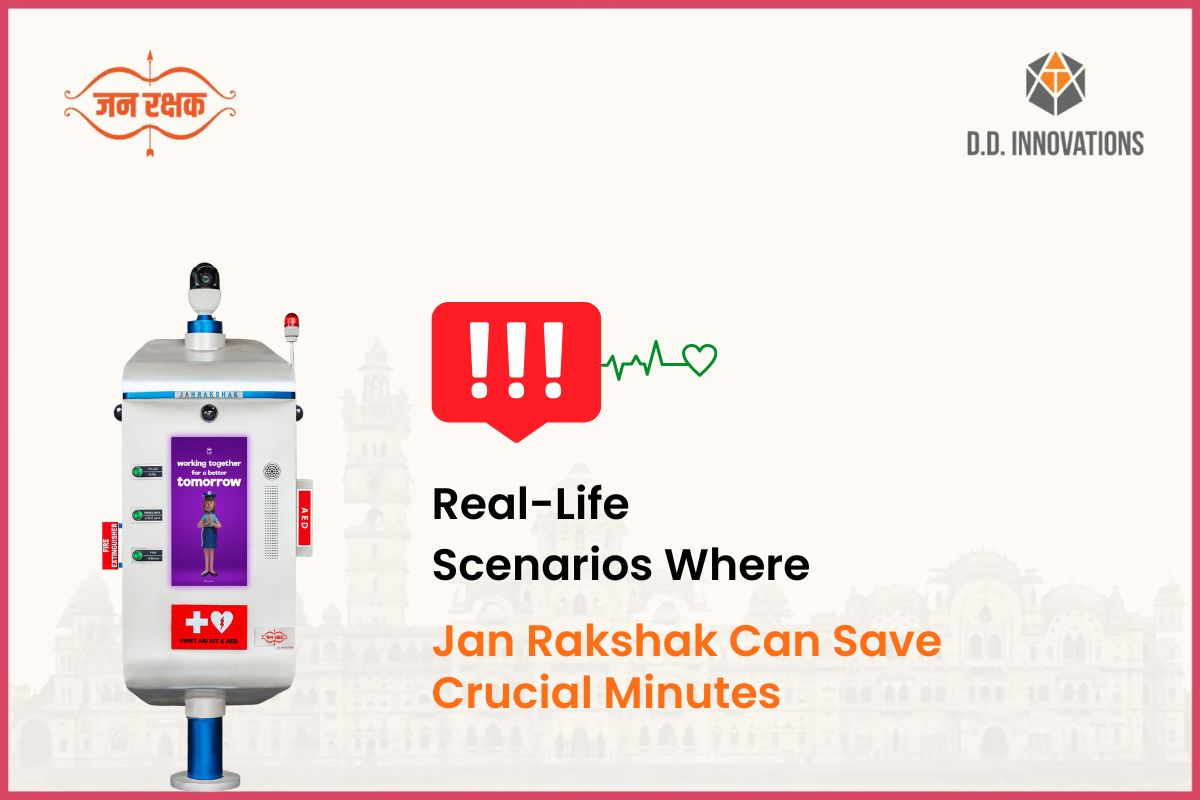
5 Real-Life Scenarios Where Jan Rakshak Can Save Crucial Minutes

In emergency situations, every second counts. Whether it’s a health crisis, a road accident, or a crime in progress, swift action can mean the difference between life and death. India, with its growing population and diverse challenges, needs a reliable Security System for public safety. That’s where Jan Rakshak comes in. This platform is designed to help citizens respond quickly and efficiently to emergencies. Let’s look at five real-life scenarios where Jan Rakshak can save crucial minutes.

1. Health Emergencies: Quick Medical Response

When a person collapses from a heart attack or severe injury, the first few minutes are crucial. Jan Rakshak allows people to access emergency medical help instantly, without having to search for contact numbers or wait for assistance. Here’s how it works:

  • Instant Alerts: Users can quickly alert emergency services or nearby ambulances.
  • First-Aid Guidance: The platform provides first-aid instructions until professional help arrives.

Jan Rakshak also has an AED for heart emergencies.

By reducing response times, Jan Rakshak can improve survival rates and prevent further complications.

2. Road Accidents: Fast Action Saves Lives

Accidents on the road are common in India, and victims need immediate medical attention. Jan Rakshak helps by:

  • Instant Reporting: Users can report accidents in real-time, sending alerts to police and medical teams.
  • Precise Location: The platform shares the exact location of the accident, allowing responders to reach the site faster.

This Security System for Public Safety in India ensures that help is on its way without delay, significantly reducing response time.

3. Fire Emergencies: Rapid Response to Save Lives

Fires can spread rapidly, whether it’s a vehicle fire on the road or a roadside incident. Every second is critical. Jan Rakshak can make a huge difference not only by:

  • Instant Fire Alerts: Users can immediately report a fire, triggering alerts to fire services, local authorities, and nearby residents.
  • Evacuation Information: The platform provides users with evacuation routes, safe zones, and nearby emergency shelters.

But also, with its built-in fire extinguisher, Jan Rakshak empowers users to take immediate action, helping to contain small fires and prevent them from escalating while professional help is on the way. By alerting the right people and providing the tools for initial response, Jan Rakshak can help reduce damage and save lives.

4. Alert Systems: Siren & Alarms for Emergency Response

In any emergency, from a medical crisis to a security threat, immediate and widespread alerts are critical. Jan Rakshak provides a powerful solution with its integrated alert systems, which are controlled by a central command center.

  • Siren and Alarms: The device is equipped with loud sirens and flashing alarms that can be activated instantly by authorized personnel at the command center once a distress signal is received. This immediately draws attention to the location, signalling a distress call to nearby people and authorities.
  • Rapid Awareness: The siren and alarm systems help to rapidly inform the public about an ongoing emergency, allowing them to take immediate safety precautions and clear the area for emergency services.

By providing a clear and loud distress signal, Jan Rakshak ensures that help arrives quickly and that the surrounding community is instantly aware of a developing situation, saving valuable time and lives.

5. Women’s Safety: Real-Time Alerts for Protection

Women’s safety remains a critical issue in India. Jan Rakshak addresses this by empowering women with a robust and immediate response system. The device features three distinct buttons for specific emergencies, allowing women to:

  • Instant Alerts: Press a button to instantly alert local authorities and the central command center, ensuring a rapid response.
  • 24/7 Surveillance: The integrated 24/7 surveillance camera provides a live feed to the command center, allowing them to assess the situation and dispatch help immediately.

By providing a direct link to authorities and constant surveillance, Jan Rakshak plays a crucial role in protecting women and improving their sense of security in public spaces.

How Jan Rakshak Enhances Public Safety

The importance of a reliable Security System for Public Safety cannot be overstated, especially in a country like India. In emergencies, swift action can prevent disasters and save lives. Jan Rakshak’s real-time alerts and direct connection to emergency services ensure that help is on its way as quickly as possible.

With the ability to report incidents in real time, access crucial information, and alert authorities, Jan Rakshak is a game-changer in public safety.

Conclusion: Every Minute Counts

In any emergency, the faster the response, the better the outcome. Jan Rakshak’s platform helps save crucial minutes, whether it’s through medical emergencies, road accidents, fire emergencies, crime prevention, or public health safety. By providing immediate access to resources, information, and support, Jan Rakshak is improving public safety across India, one minute at a time.