
Emergencies can occur without warning—whether it is a road accident, fire outbreak, medical crisis, or public safety threat. In such critical moments, the actions taken within the first few minutes often determine the outcome. Panic, confusion, and delayed communication can worsen situations, while timely response and clear decision-making can save lives.
In a rapidly urbanizing nation like India, preparedness is no longer optional. Understanding what citizens should do first during emergencies and recognizing the importance of an emergency device in India is essential for building safer and more resilient communities.
When an emergency occurs, people often experience shock or confusion, which can delay action. However, the initial response—commonly known as the “golden minutes”—plays a crucial role in minimizing damage and ensuring timely assistance.
Immediate and informed action can:
- Prevent escalation of incidents
- Reduce injuries and fatalities
- Enable faster coordination with emergency services
- Support effective rescue and evacuation efforts
Prepared citizens form the foundation of a strong public safety ecosystem.
1. Stay Calm and Assess the Situation
Remaining calm is the first and most important step. Panic can lead to poor decisions and miscommunication. Quickly assess the environment to identify potential risks and determine the type of emergency.
2. Ensure Personal Safety
Before offering help to others, ensure your own safety. Move to a secure location and avoid exposure to hazards such as fire, traffic, electrical risks, or structural damage.
3. Alert Emergency Services Immediately
Contact the appropriate emergency service without delay:
- 100 – Police
- 101 – Fire Services
- 108 – Ambulance
Providing clear and accurate information, including location and nature of the incident, helps authorities respond efficiently.
4. Use Available Emergency Devices
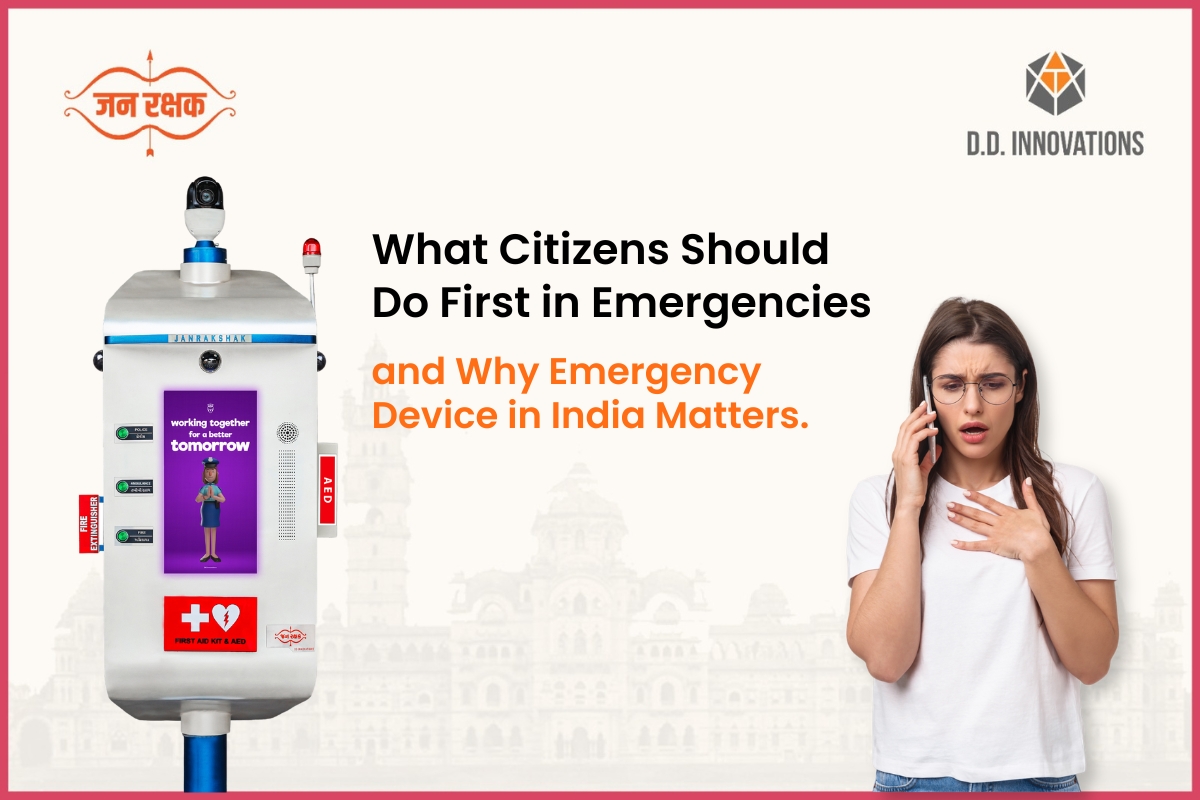
If an emergency device in India is available nearby, use it to establish direct contact with emergency services. Public emergency systems like Jan Rakshak offer one-touch connectivity, eliminating delays caused by searching for numbers or navigating phone calls.
5. Assist Victims Responsibly
If it is safe to do so, provide basic assistance such as first aid, guiding evacuees, or supporting injured individuals until professional help arrives. Avoid moving victims unnecessarily unless there is an immediate risk.
6. Guide and Inform Others
Help maintain order by guiding others to safety, preventing crowd panic, and sharing accurate information with authorities.
Limitations of Traditional Emergency Reporting:
While mobile phones have improved communication, they are not always reliable during emergencies. Network congestion, battery failure, and panic-induced miscommunication can delay assistance. Similarly, CCTV cameras only record incidents and do not provide direct
intervention.These limitations highlight the need for a reliable emergency device in India that ensures instant connectivity with emergency services, even in high-stress situations.
- An emergency device in India is designed to provide immediate access to police, fire, and medical services through a simple and accessible interface. Installed in public areas such as roads, campuses, parks, transport hubs, and commercial zones, these devices act as vital emergency touchpoints.
Key benefits include:
- Instant one-touch access to emergency services
- Reduced response time and improved coordination
- Reliable communication without dependence on personal devices
- Enhanced safety in high-footfall public spaces
- Empowerment of citizens to act during emergencies
By bridging the gap between distress and response, emergency devices play a crucial role in strengthening public safety infrastructure.
Jan Rakshak: A Smart Emergency Device in India
Jan Rakshak is an advanced public emergency response system designed to enhance citizen safety across India. Built for simplicity and reliability, the device provides direct connectivity to essential emergency services through three dedicated buttons:
- 100 – Police
- 101 – Fire Services
- 108 – Ambulance
With just a single press, users can alert the relevant authorities, ensuring rapid assistance without the need for mobile connectivity or technical expertise. Installed at strategic locations such as highways, educational institutions, marketplaces, and transport hubs, Jan Rakshak transforms public spaces into secure and responsive environments.
Building Safer Communities Through Awareness
Safety is a shared responsibility. When citizens are aware of emergency protocols and have access to reliable emergency devices, communities become more resilient and prepared.
The integration of an emergency device in India supports:
- Smart city and urban safety initiatives
- Disaster preparedness and crisis management
- Protection for women, children, and senior citizens
- Institutional and municipal safety compliance
- Public confidence in safety infrastructure
Empowered citizens, supported by smart technology, form the backbone of a secure society.
Conclusion
Emergencies demand swift action, clarity, and coordination. Knowing what to do first—stay calm, ensure safety, alert authorities, and assist responsibly—can significantly reduce risks and save lives.
As India continues to urbanize, integrating reliable public safety solutions becomes essential. An emergency device in India provides immediate access to emergency services, minimizes response time, and strengthens the nation’s safety infrastructure.
Solutions like Jan Rakshak demonstrate how technology can empower citizens and enhance emergency preparedness. In moments of crisis, a single press of a button can initiate life-saving support.To learn more about implementing advanced emergency safety solutions in your region, visit janrakshak.in and take a proactive step toward building safer communities across India.
FAQS
Stay calm, assess the situation, ensure personal safety, and immediately alert emergency services.
It is a public safety system that provides direct, one-touch connectivity to police, fire, and ambulance services.
Jan Rakshak enables instant communication with emergency authorities, reducing response time and improving coordination.
They are installed at highways, campuses, public parks, transport hubs, marketplaces, and commercial areas.
They enhance urban safety, support crisis management, and contribute to resilient and secure smart city infrastructure.