
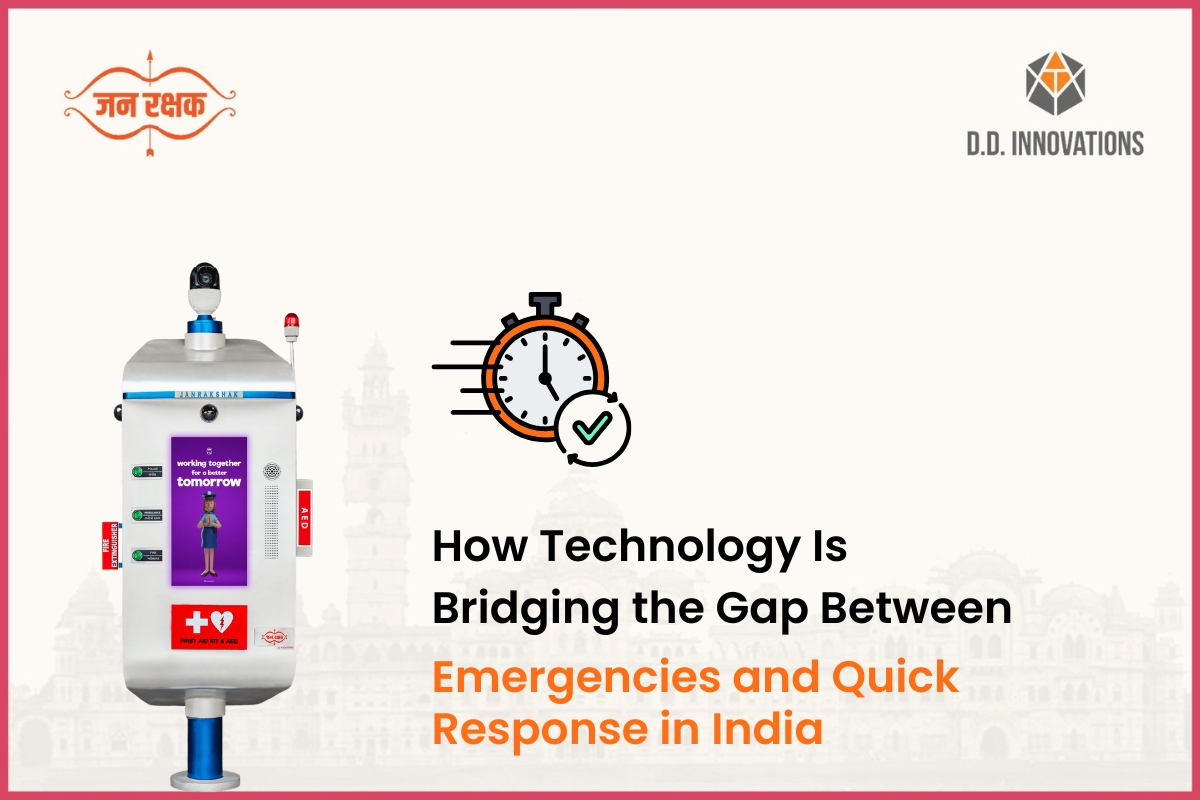
In a country as vast and diverse as India, emergency response has always been a complex challenge. From crowded urban streets to remote rural villages, emergencies such as medical crises, fires, accidents, and security threats can occur without warning. In such moments, the time taken for help to arrive can determine outcomes, often deciding between life and death.
Today, technology is transforming India’s emergency response ecosystem. Smart solutions like public emergency systems are reducing response times, improving coordination, and ensuring help reaches people when they need it the most.
The Critical Minutes That Define Outcomes
Emergencies rarely come with advance notice. A sudden cardiac arrest, a road accident, a fire outbreak, or a safety threat demands immediate action. Traditionally, people had to dial emergency numbers, explain their location, and describe the situation, a process that often consumed precious minutes.
In many cases, emergencies went unreported because people didn’t know whom to call or were too panicked to communicate clearly. These delays highlighted a critical gap between emergencies and effective response, especially in public spaces.
The Rise of Public Emergency Devices in India
The introduction of the public emergency device in India has been a game-changer. Designed for instant access and ease of use, these devices allow citizens to alert emergency services with a single action. Installed in public areas, residential complexes, campuses, and commercial zones, they eliminate confusion during high-stress situations.
Modern emergency systems like Jan Rakshak integrate multiple response mechanisms into one unit, enabling quick connection to police, ambulance, or fire services. Their simplicity ensures that anyone, children, elderly citizens, or people unfamiliar with technology, can use them effectively during emergencies.
Closing the Urban–Rural Safety Divide
One of India’s long-standing challenges has been ensuring equal access to emergency services across urban and rural regions. While cities benefit from infrastructure and connectivity, rural areas often face power and network limitations.
Technology-enabled public emergency devices are helping bridge this divide. Features such as low-power operation, solar compatibility, and minimal network dependency allow these systems to function even in areas with limited resources. As a result, citizens in remote villages can now access emergency support comparable to that in metropolitan areas.
Real-Time Monitoring and Smarter Response
Another major advancement is real-time monitoring. Emergency alerts generated through smart safety devices can be tracked instantly by control centres. This enables authorities to assess situations faster, deploy appropriate resources, and reduce response times.
Data collected from these systems also helps identify high-risk zones and recurring emergency patterns. With this insight, emergency services can plan more effectively, strategically position resources, and improve overall preparedness.
Empowering Vulnerable Communities
Technology has significantly improved safety for vulnerable groups. Elderly individuals benefit from simple push-button emergency systems. Women feel safer with visible panic assistance units in public spaces. Schools and institutions are better protected with emergency devices that can instantly alert authorities during threats.
By designing safety systems that prioritize accessibility, public emergency solutions ensure protection for everyone, not just the tech-savvy population.
Building a Culture of Preparedness
Beyond hardware, technology is fostering a culture of awareness and preparedness. Integrated systems encourage citizens to report emergencies they witness, creating a community-driven safety network. Educational features and awareness initiatives help people understand how to respond during crises, turning ordinary citizens into first responders.
The Road Ahead
India’s emergency response infrastructure continues to evolve, driven by digital initiatives and innovation-driven solutions. Smart public safety systems like Jan Rakshak are no longer optional; they are becoming essential components of modern infrastructure.
As these systems expand and integrate further, they form a silent yet powerful safety net across the nation. By bridging the gap between emergencies and response, technology is transforming moments of panic into organised, life-saving action, helping India move toward a safer, more resilient future.